
There are weekends away that leave you feeling as though you have simply changed your location. Then there are the rare ones that actually change your pace.
Cypress Valley by Artistree, in the Texas Hill Country less than an hour from Austin, belongs to the second category.
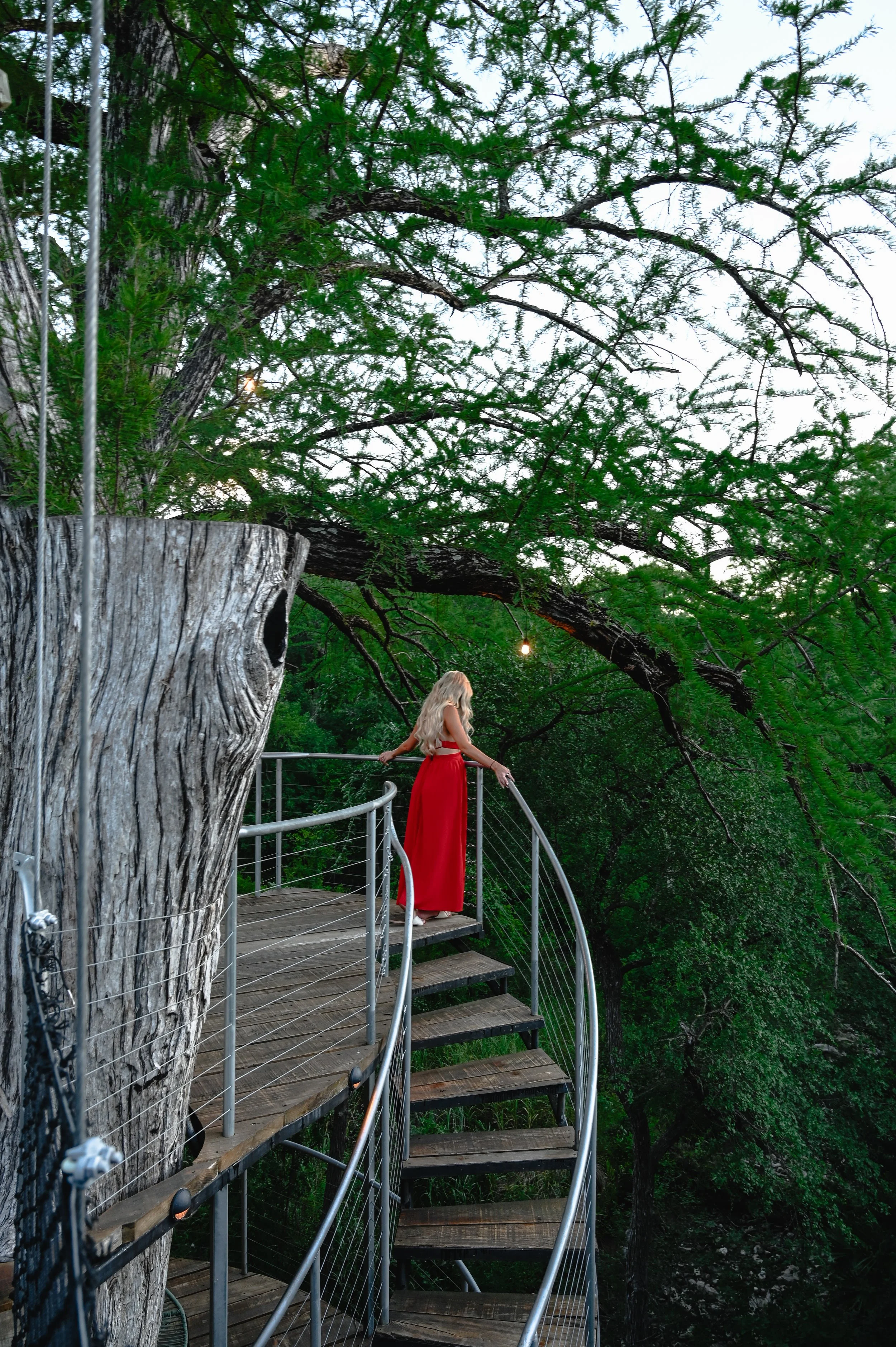
The drive from Austin is short enough to make this an easy escape, but once you arrive at Cypress Valley, the city feels wonderfully far away. Here, the accommodation is not a room inside a conventional hotel. It is a treehouse, surrounded by old-growth cypress trees, with a spring-fed creek running through the ravine below.
We stayed in Yoki, one of the property's signature treehouses, and it was exactly the kind of place where you quickly stop wondering what there is to do and start appreciating that there is nowhere you need to be.
There is no Wi-Fi in the treehouses.
There is no television.
Phone service is minimal.
And that is not an inconvenience to overcome. It is part of the design.
Cypress Valley is about stepping away from the constant noise of everyday life and giving yourself the rare opportunity to pay attention to the people you are with and the landscape around you.
An Easy Escape From Austin
Cypress Valley is in Spicewood, around 30 miles west of downtown Austin, making it an easy drive for a weekend escape from the city. The property sits in the Texas Hill Country and stretches across more than 100 acres, with its treehouses distributed along a cypress-lined, spring-fed creek.
That proximity is part of the appeal.
You don't need a long road trip or a complicated itinerary. Within roughly an hour, you can go from Austin's restaurants, traffic and constant activity to a place where the dominant sounds are birds, insects, water and wind moving through the trees.
It feels like a proper getaway without requiring much effort to get there.
A Property Built Around Eco-Tourism
What makes Cypress Valley particularly interesting is that the eco-friendly philosophy isn't something added to the experience as a marketing detail.
It is where the story begins.
The Beilharz family first came to the property in 1998, moving from West Austin to an undeveloped piece of the Texas Hill Country. Their early approach was rooted in living close to nature and understanding how they could share the land without damaging what made it special.
When Cypress Valley opened to the public in 2005, the family wanted people to experience the land while also learning about stewardship and the value of preserving the natural environment.
The challenge was how to welcome visitors without turning the property into something fundamentally different.
Instead of heavily altering the landscape, the family developed experiences that worked with it.
The treehouses followed.
Today, the property describes each treehouse as an expression of its commitment to sharing the land with a very light footprint. Artistree has been involved in designing and building the property's five existing treehouses, each with its own character and approach to nature.
It is a refreshing approach to hospitality.
The goal isn't to bring the city into the woods.
It is to get you to notice the woods.
The Story Behind the Treehouses
Cypress Valley's first treehouse came after guests repeatedly asked whether they could stay overnight following the property's early adventure experiences.
The family introduced its first treehouse in 2006, and the idea took off almost immediately. According to Cypress Valley, the property soon became a favorite for proposals, honeymoons and anniversaries, evolving from an adventure destination into a place associated with romance and time spent together.
The evolution makes sense.
There is something inherently romantic about sleeping above a creek in the middle of a forest.
But Cypress Valley isn't only for couples. The property also has larger accommodations, including The Nest and Heartsong Lodge, making it possible for families and groups to experience the landscape in different ways.
Our Stay in Yoki
For our stay, we chose Yoki.
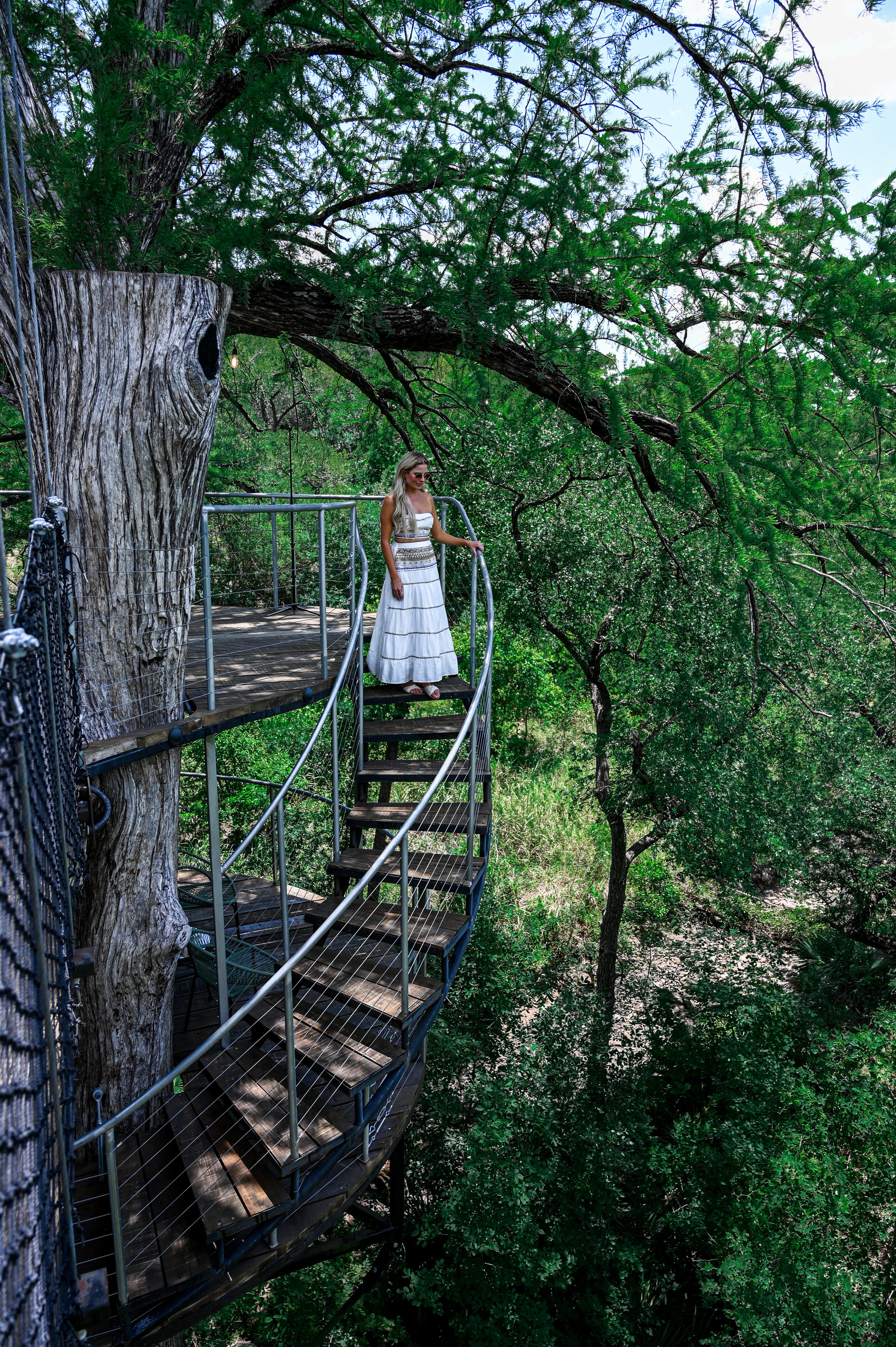
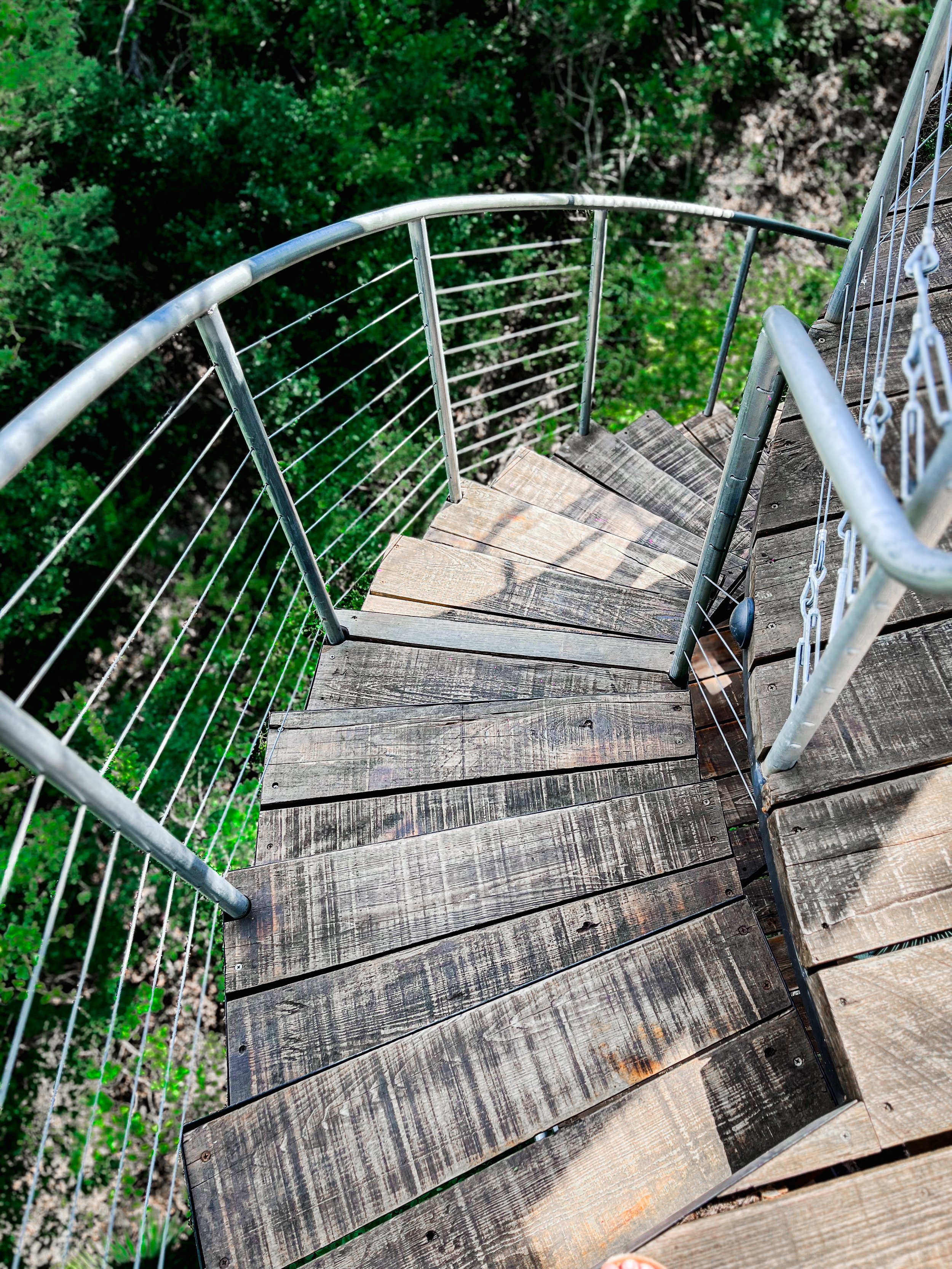
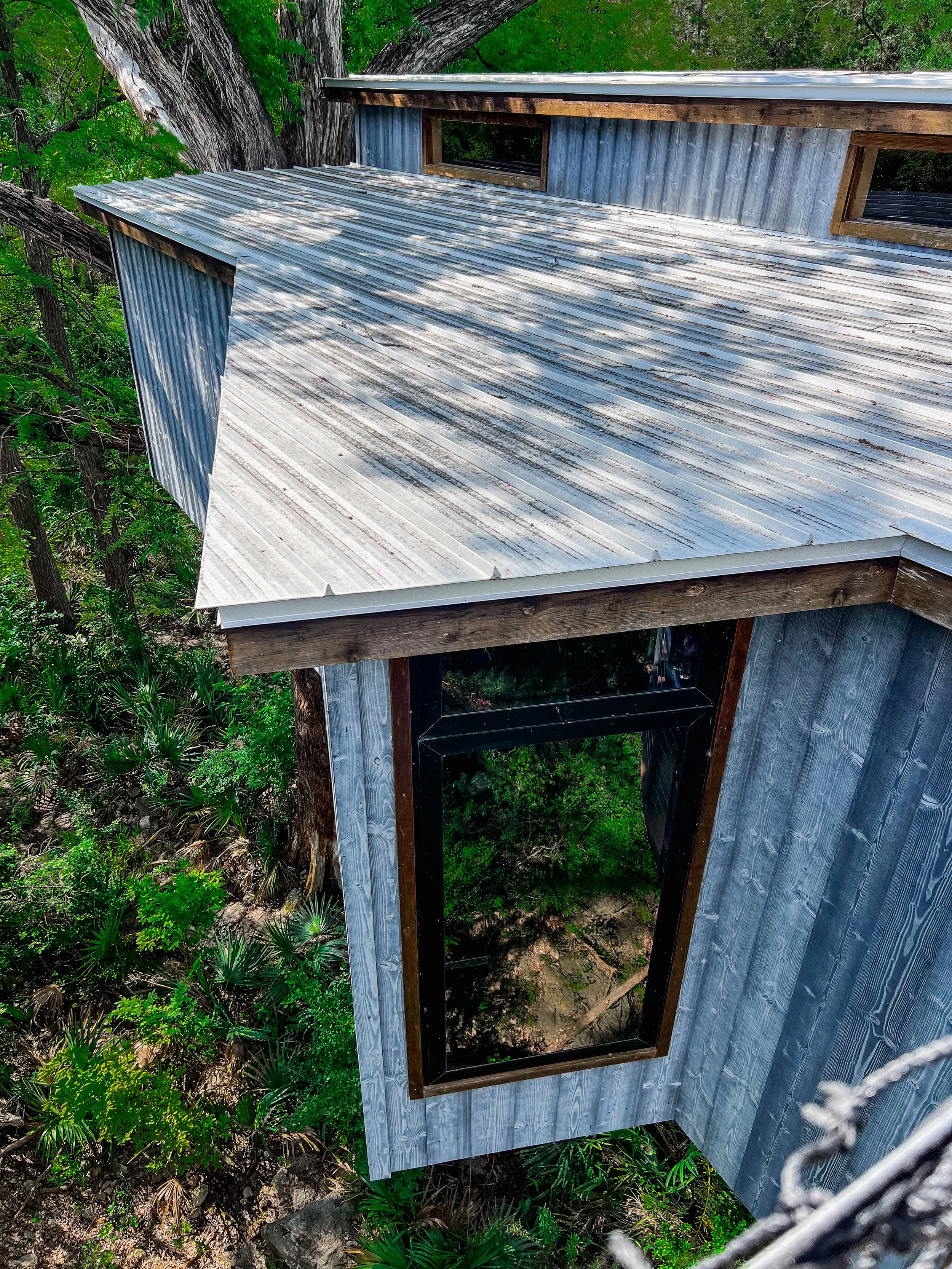
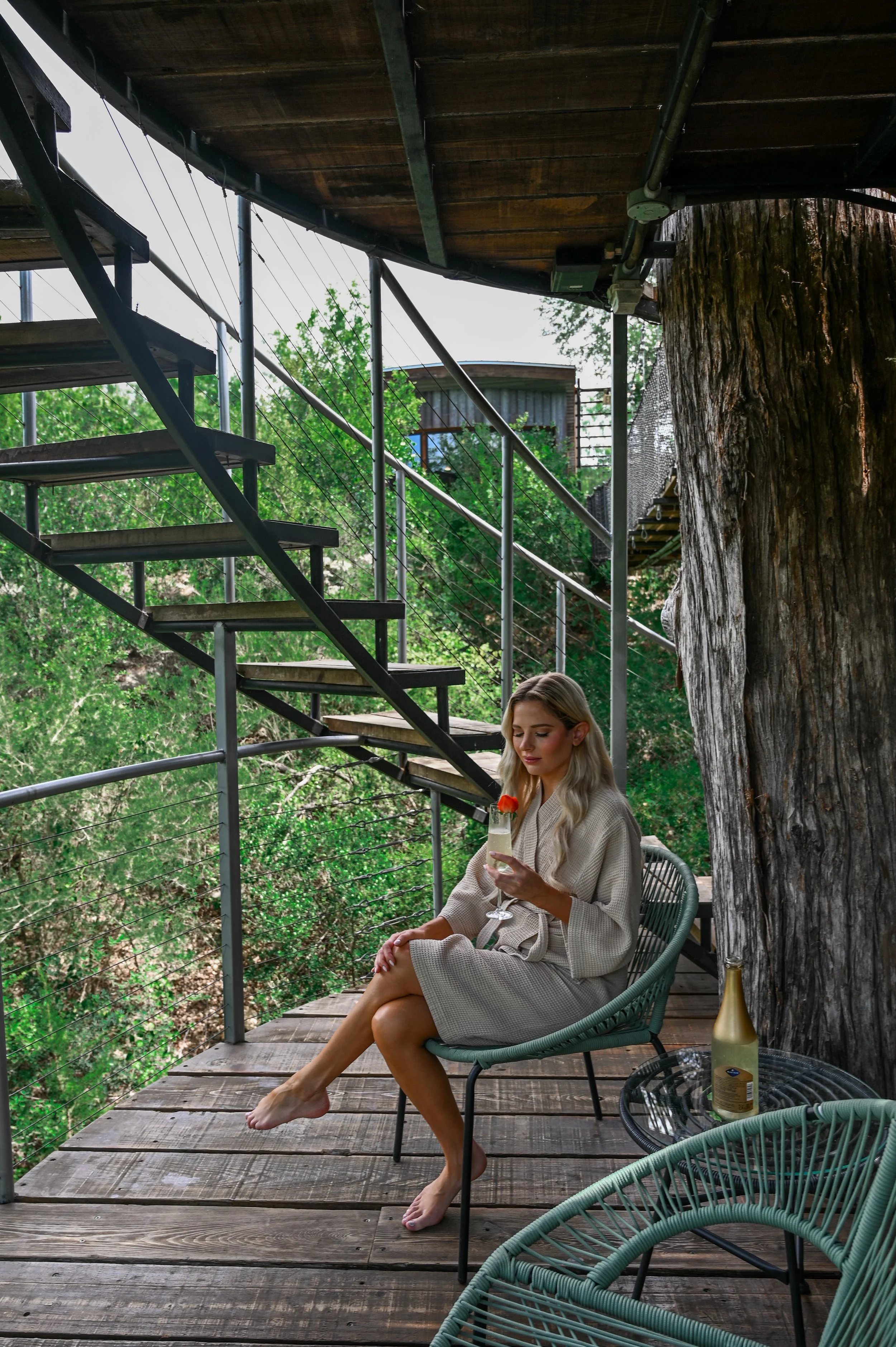
The treehouse sits above the spring-fed creek ravine among mature cypress trees, with a design that feels deliberately connected to the landscape rather than simply placed on top of it.
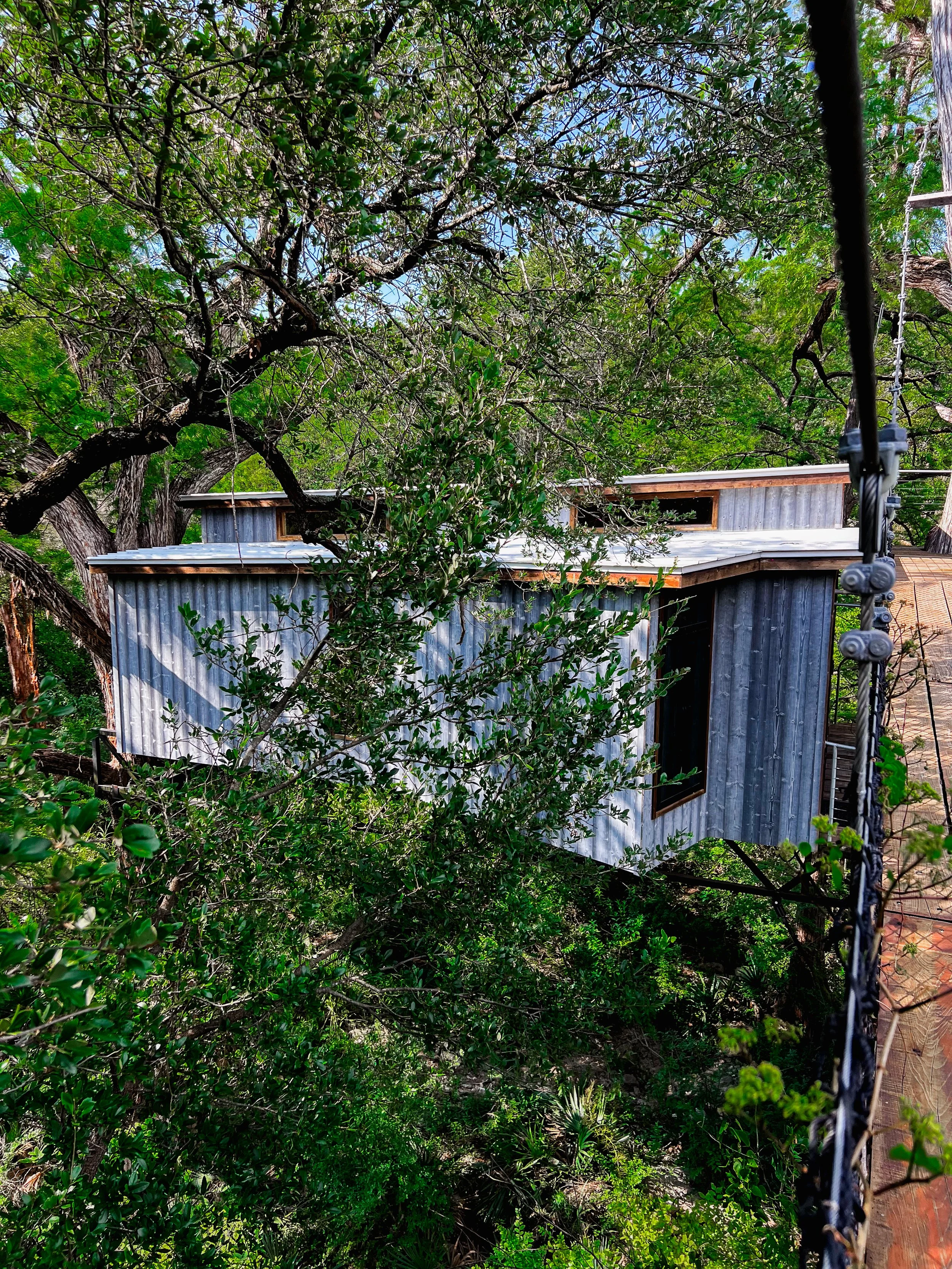
Yoki was designed by Will Beilharz of Artistree, and the architecture is a particularly good example of the company's approach to combining sustainability, function and thoughtful design. The structure is elevated above the ravine, and natural materials and large windows bring the surrounding trees and creek into the experience.
The result is a treehouse that feels grown into its setting.
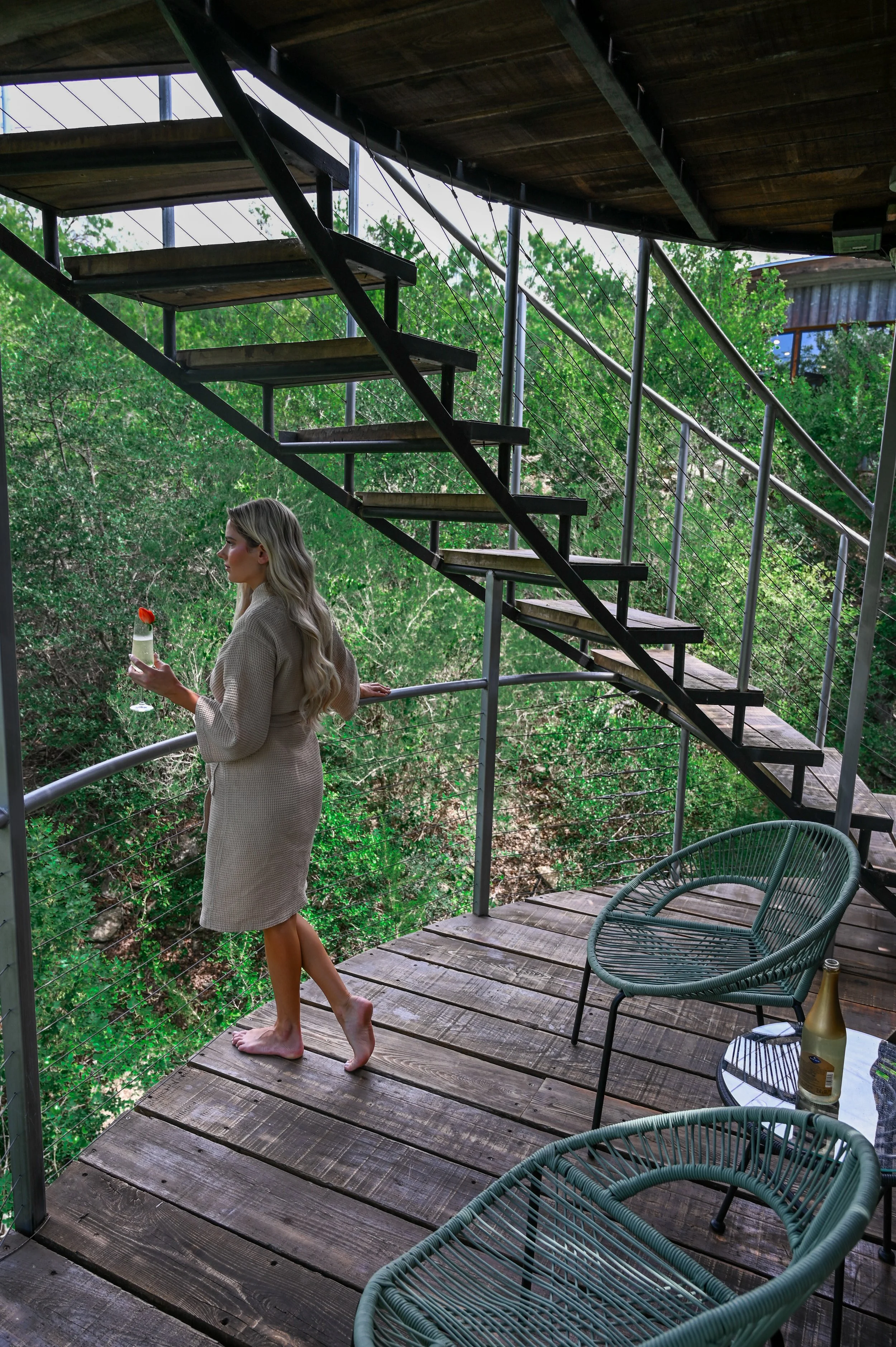
You don't simply look at the trees from Yoki.
You feel surrounded by them.
Crossing the Bridge to the Treehouse
One of the first things that makes Yoki feel special is the journey into it.
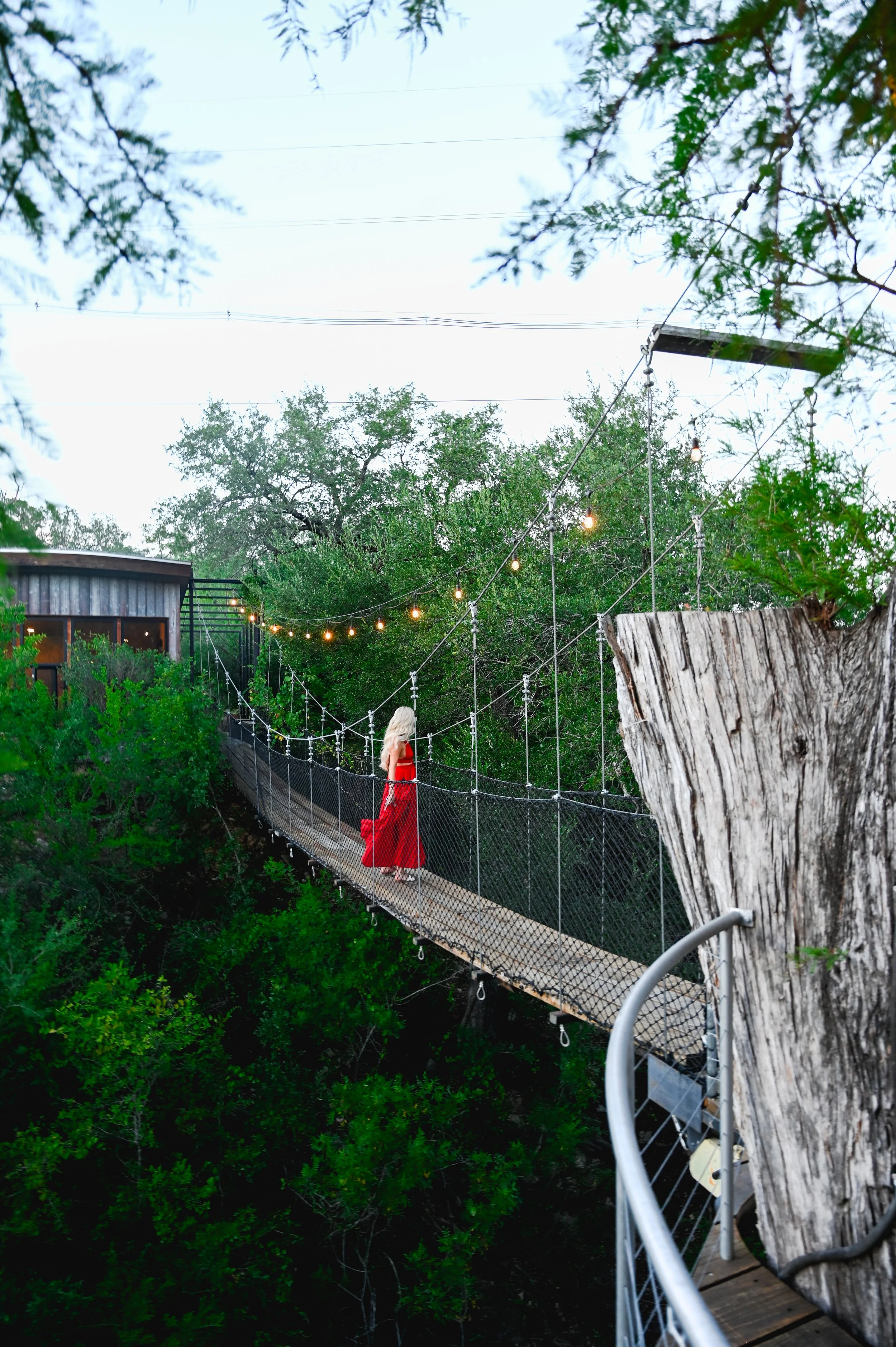
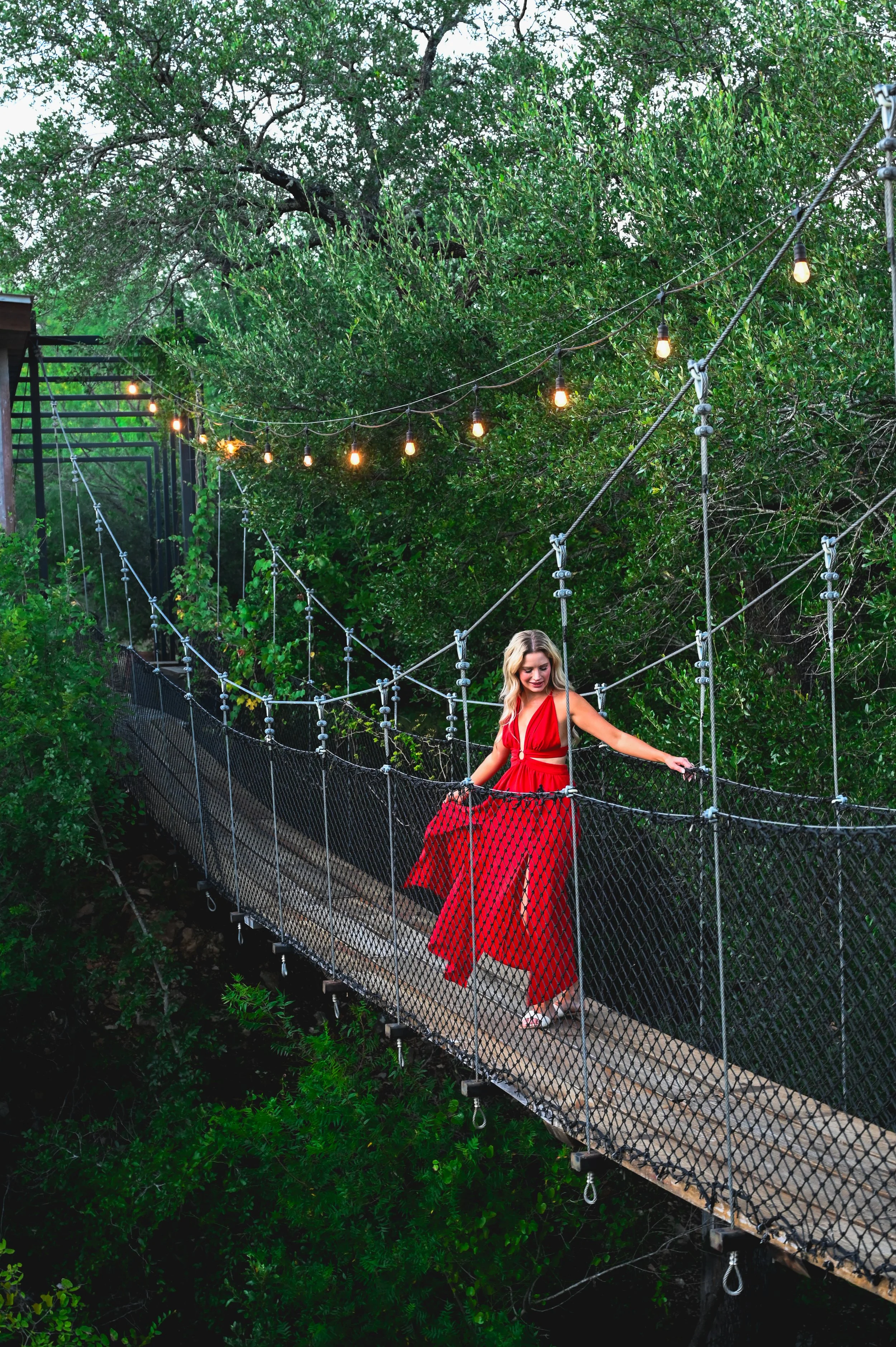
A suspension bridge connects the main treehouse to the separate bathhouse, creating a wonderfully theatrical arrival without making the experience feel overdone.
The bridge is around 60 feet long and crosses the ravine, giving you a sense of just how high above the landscape you are.
It is the kind of detail that makes the accommodation memorable before you have even unpacked.
There is something childlike about crossing a bridge into a treehouse, except this time there is a comfortable bed, a proper kitchen and a soaking tub waiting at the other end.

Inside Yoki
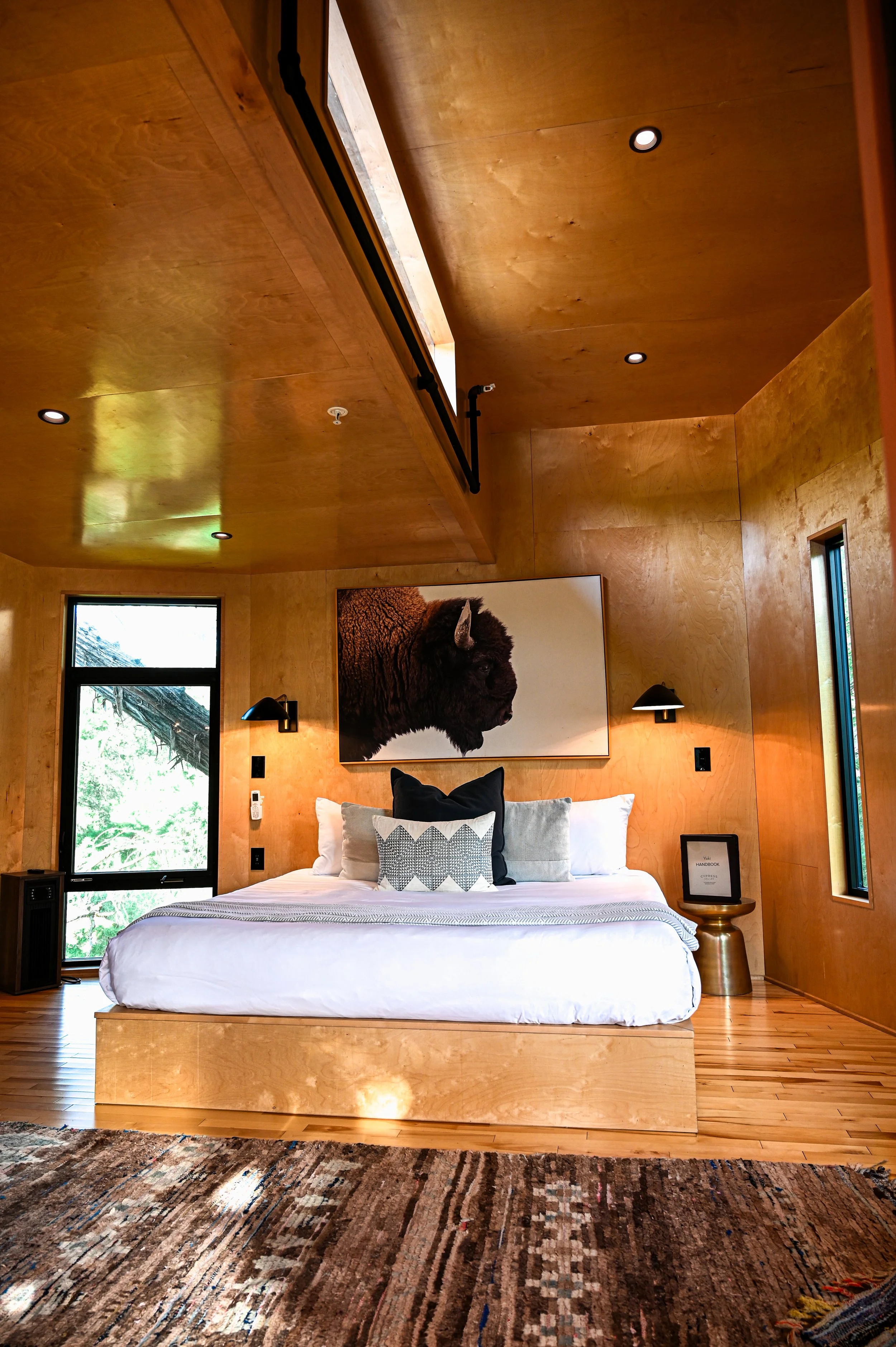
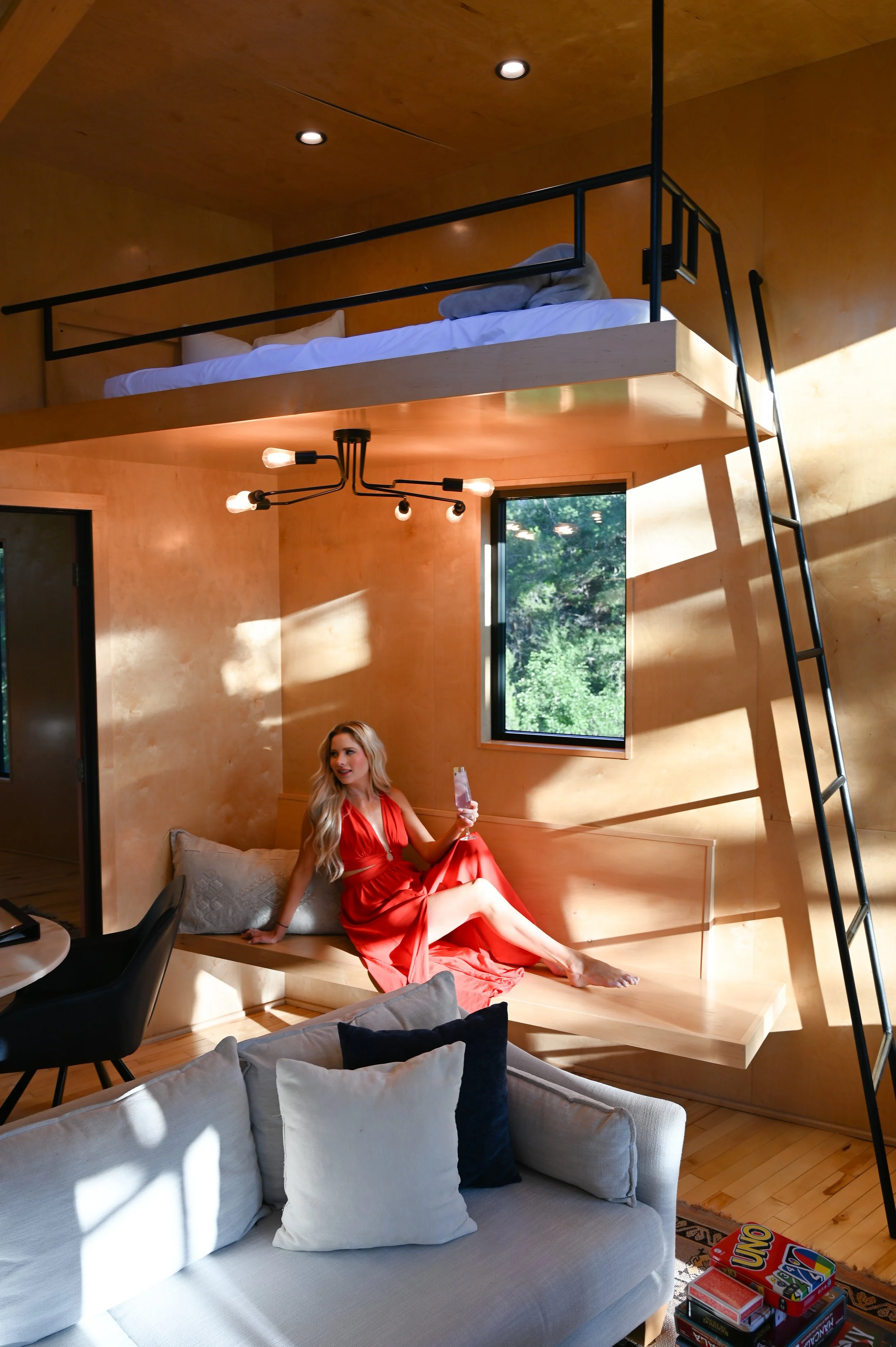
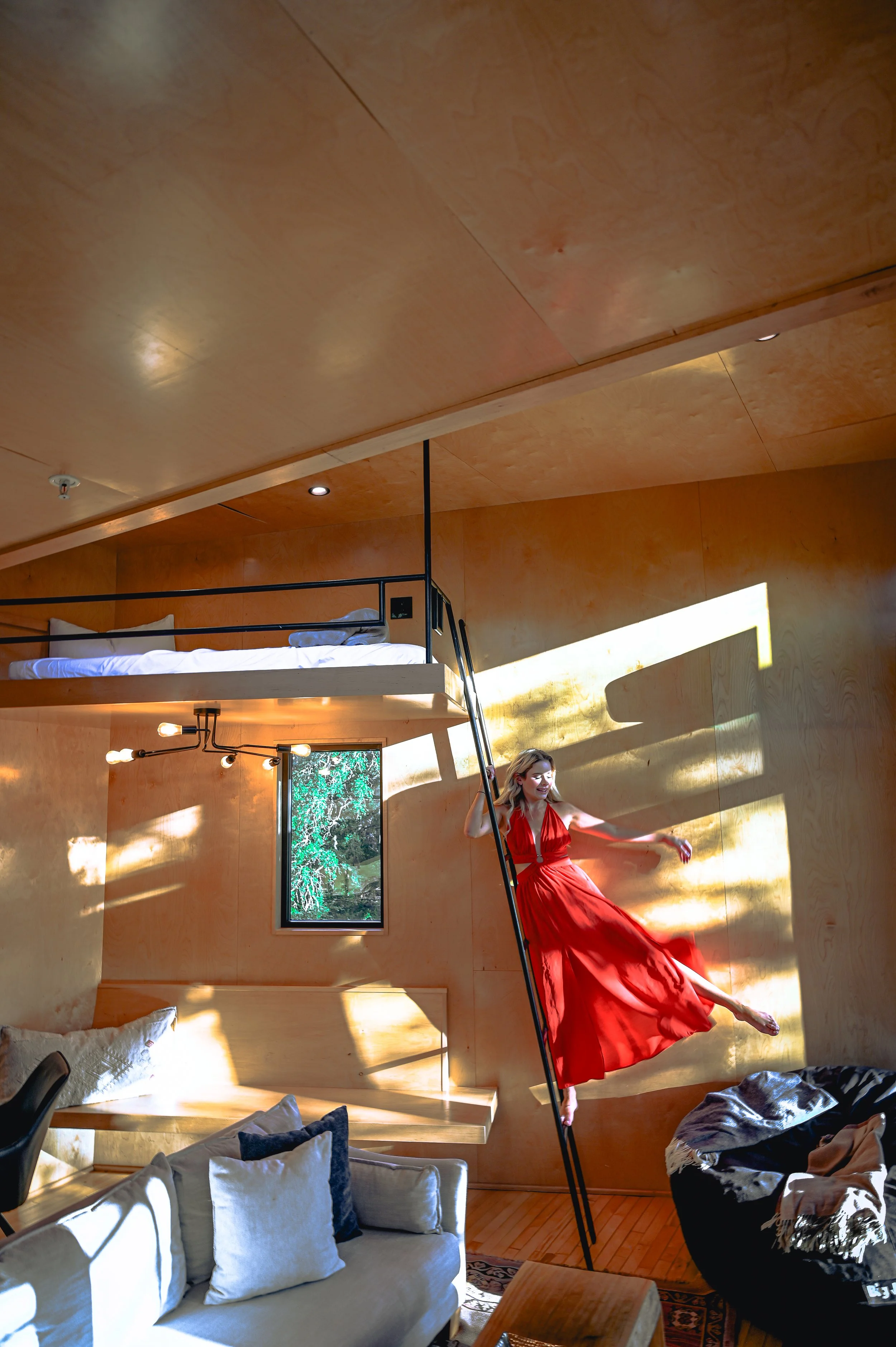
Yoki is surprisingly comfortable while still keeping the feeling of a treehouse.
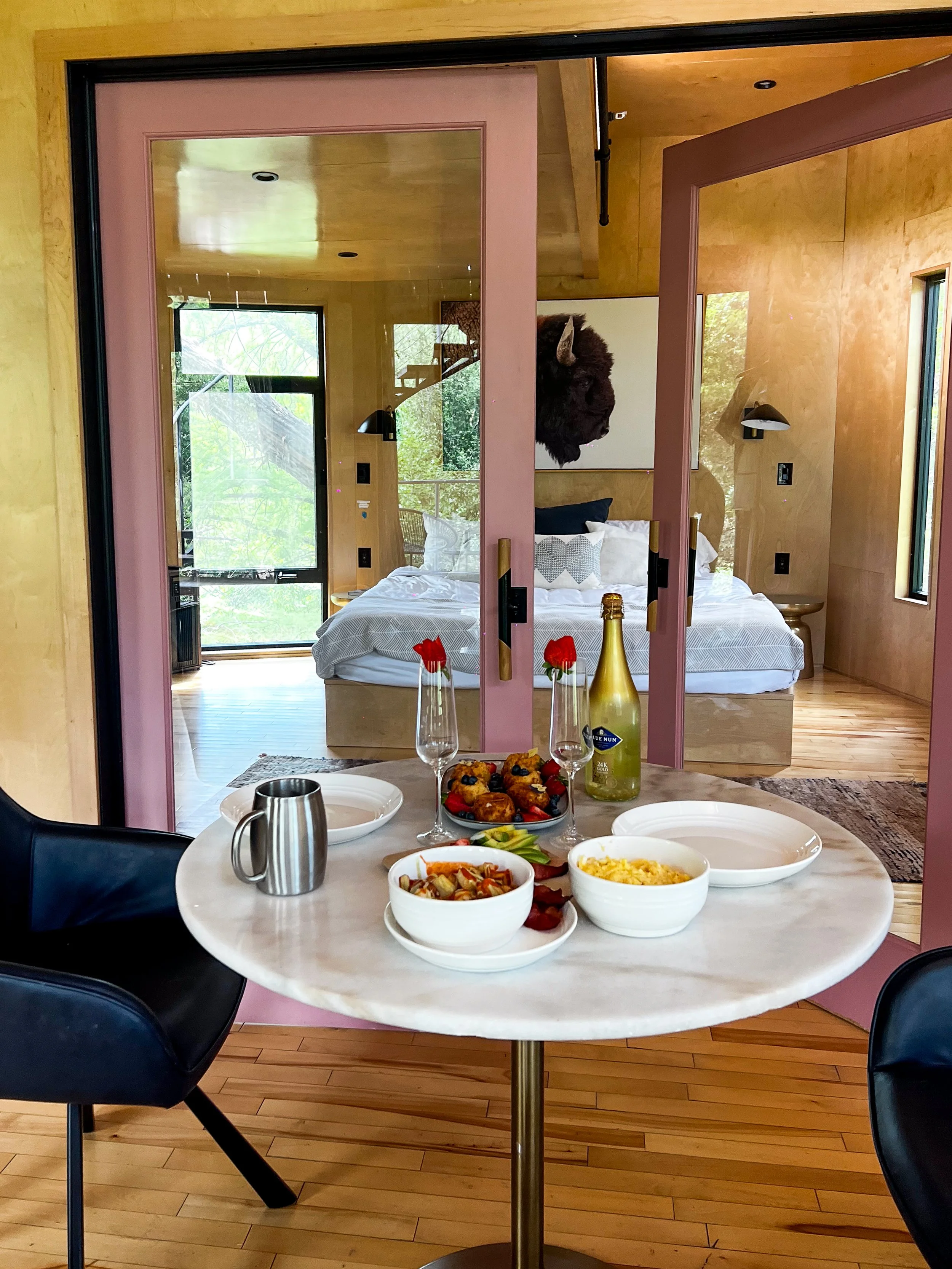
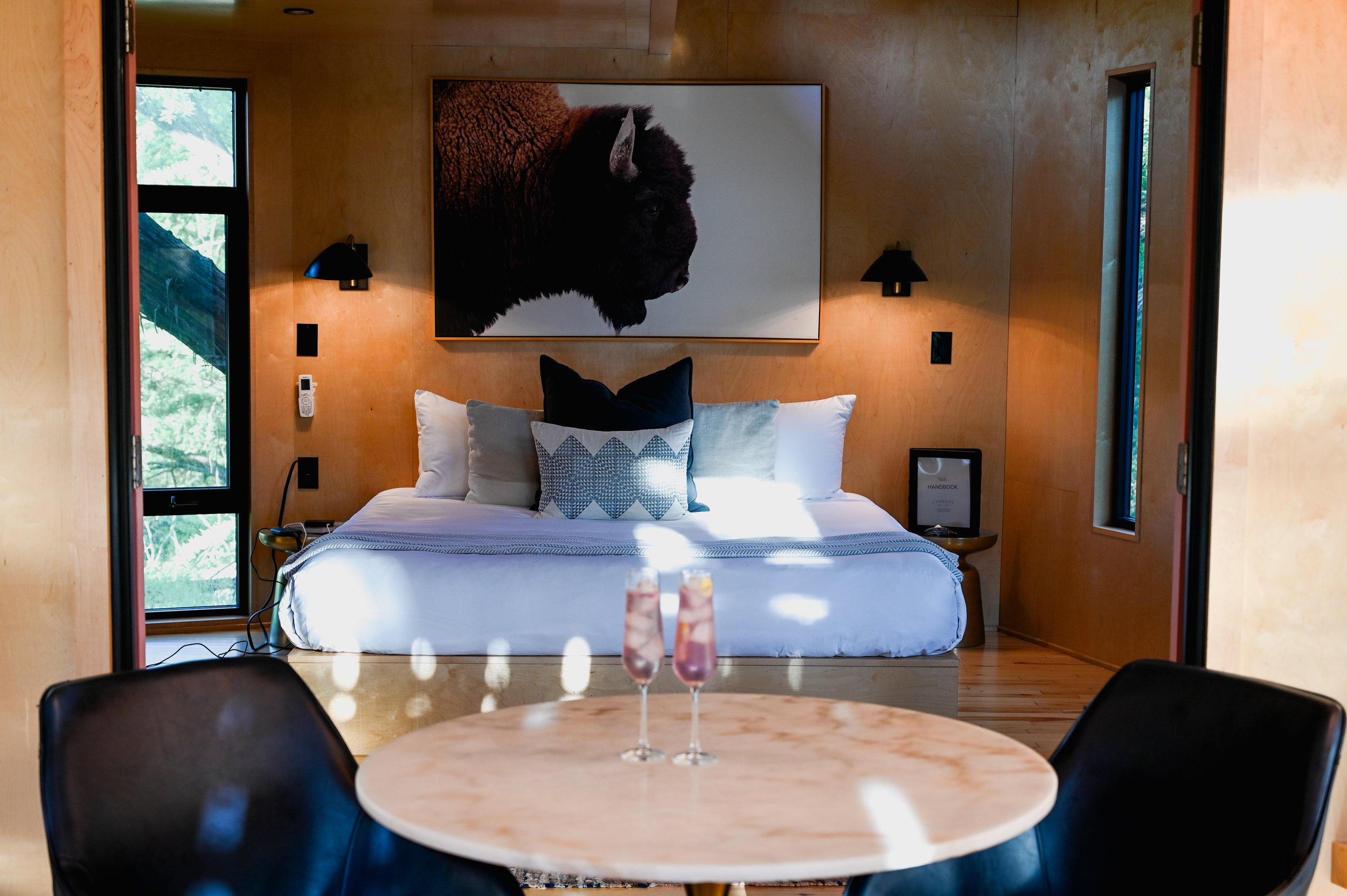
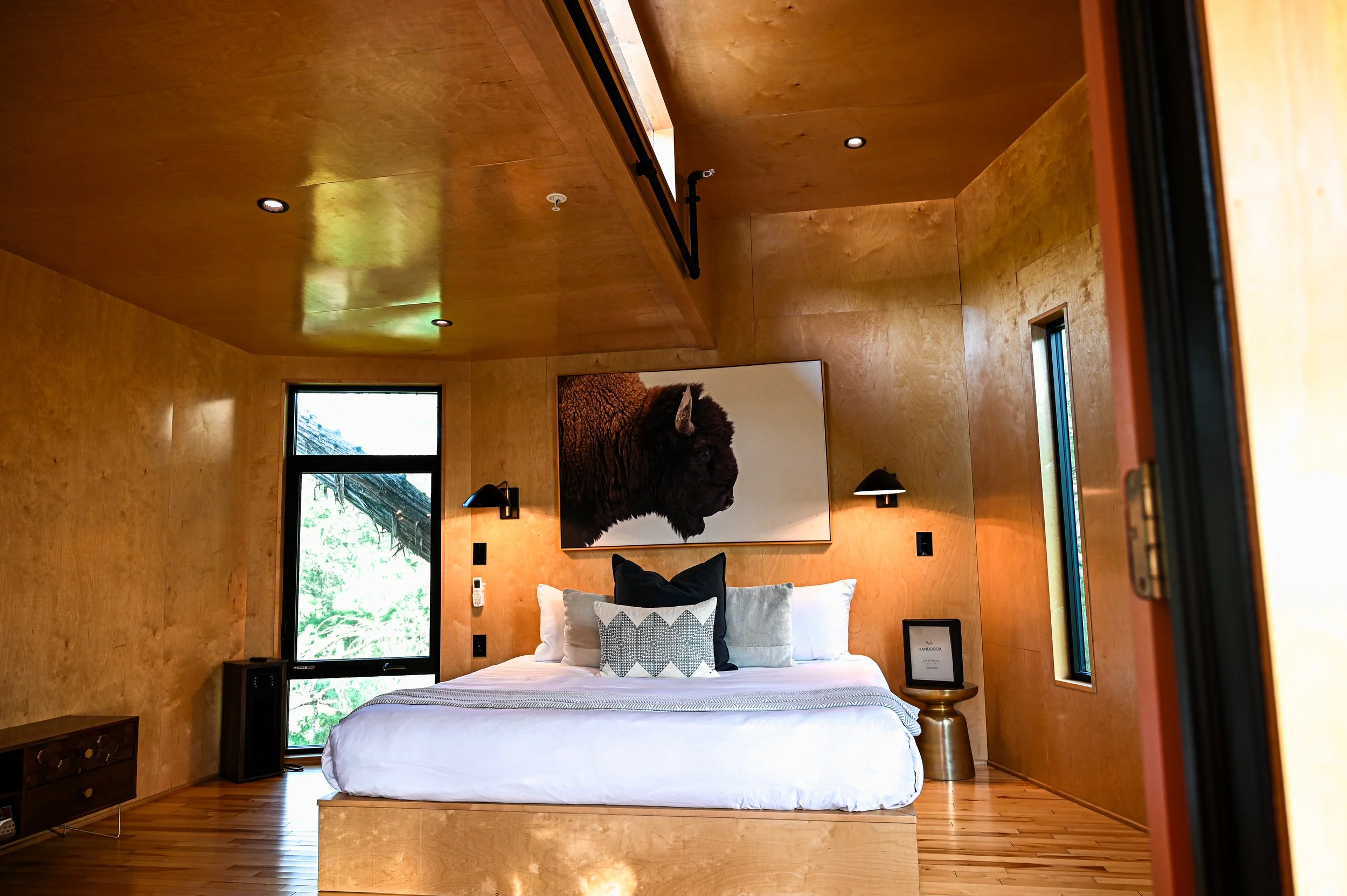
There is a king-size bed in the heated and air-conditioned bedroom, along with a living area, sofa and bean bag. The treehouse also has a kitchenette and dining area, which makes it easy to prepare a simple meal and settle in for the evening.
The kitchenette includes an electric kettle, small induction stove and refrigerator, along with plates, utensils and glassware. Locally roasted Cuvee coffee is also provided.
And this is where the experience starts to change.
You don't have a room-service menu waiting downstairs.
You don't have a television calling you back to the sofa.
Instead, you can pick up ingredients before arriving, cook dinner together and enjoy it in the treehouse.
It sounds simple.
It is.
And that is exactly why it works.
The Private Bath House
Across the suspension bridge is Yoki's private bathhouse.
This is one of the most memorable parts of the stay.
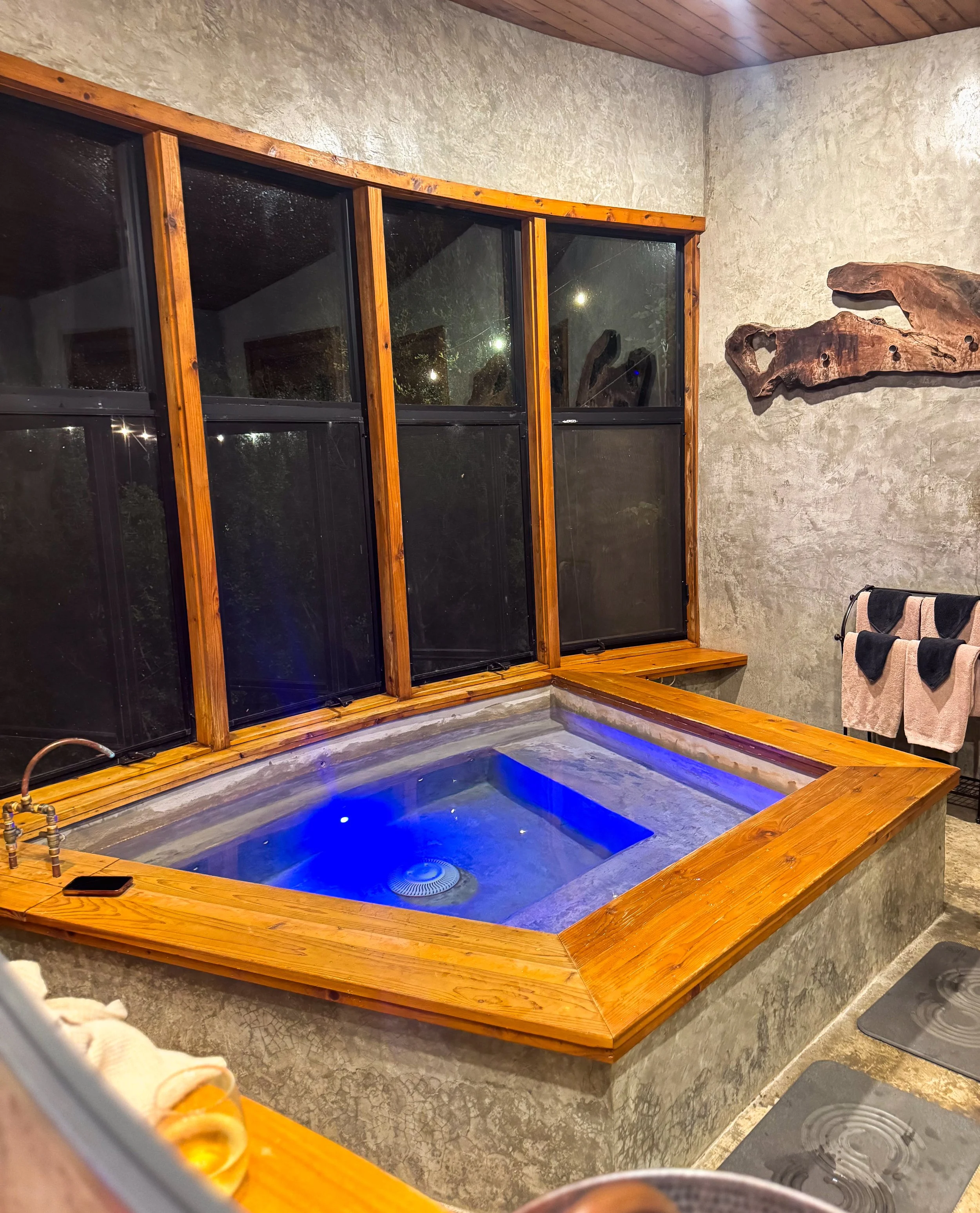
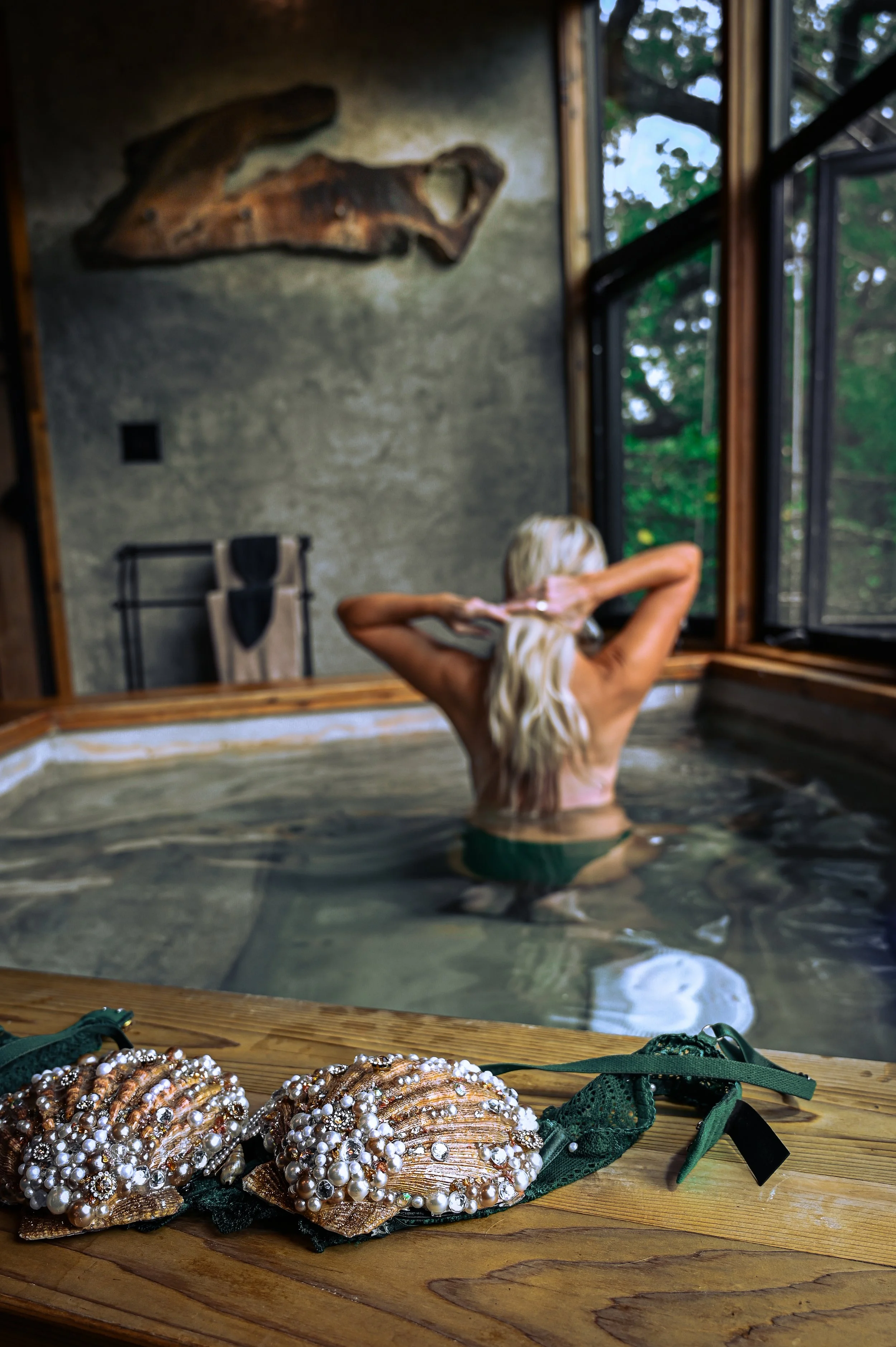
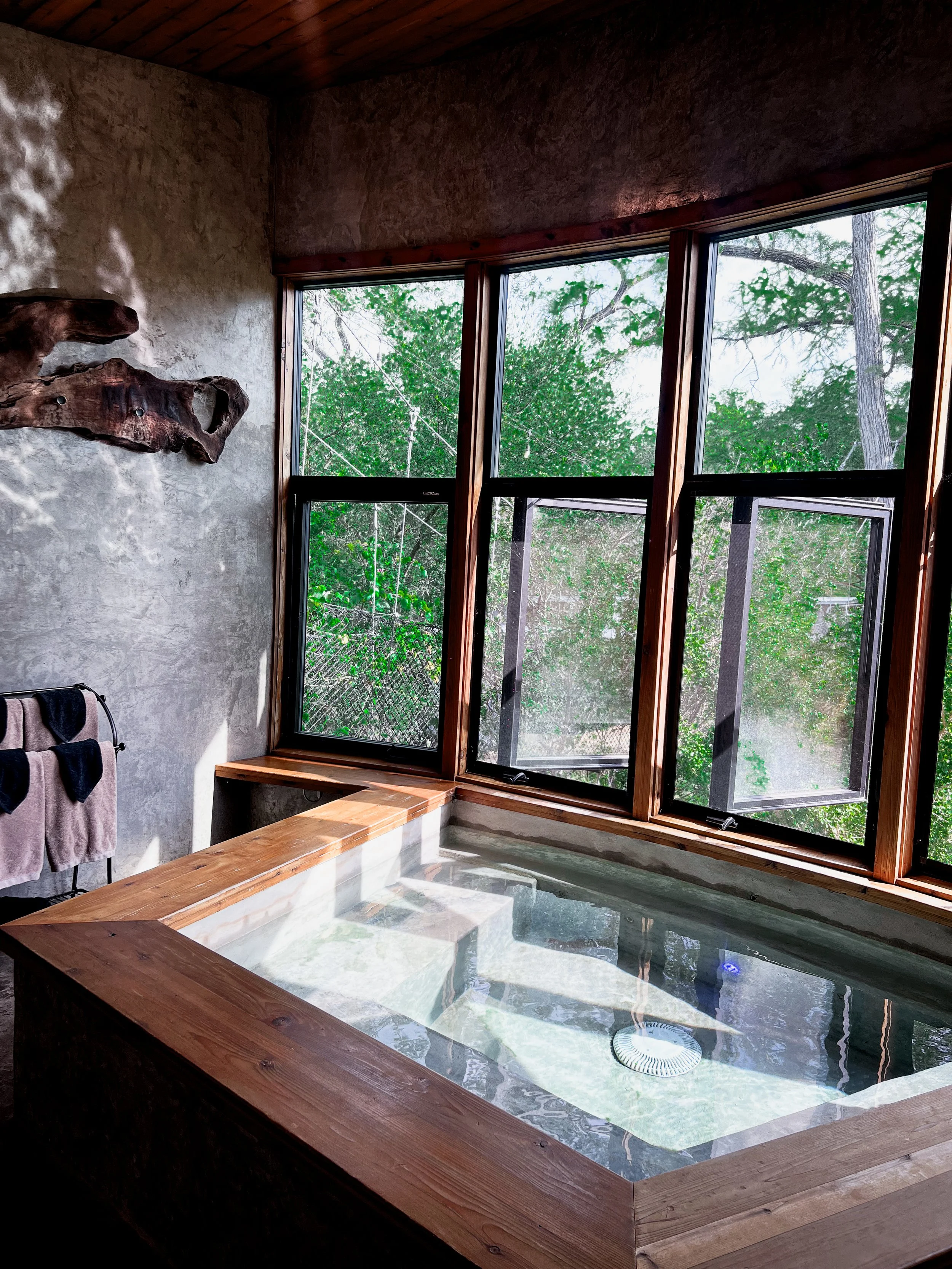
The bathhouse includes an Onsen-style Japanese soaking tub positioned to take advantage of the surrounding landscape. The design was inspired in part by water, from the spring-fed creek beneath the treehouse to the restorative quality of a long soak.
There is something wonderfully peaceful about getting into the tub while surrounded by trees.
During the day, you can look out toward the ravine.
At night, the experience becomes even quieter.
The bathhouse also has a separate shower, making it a proper private bathroom rather than simply an outdoor soaking experience.
It is one of those hotel details that you remember long after the stay.
A Kitchen Made for Staying In
Yoki's small kitchen is another feature that sounds modest until you actually use it.
For a short escape, having the ability to cook makes the treehouse feel more like your own little hideaway.
Bring breakfast supplies.
Pick up something local for dinner.
Make coffee in the morning.
Sit down together.
There is no pressure to leave the property simply because it is mealtime.
That becomes particularly valuable when the whole purpose of the trip is to slow down.
No Wi-Fi. No TV. Almost No Phone Service.
This is probably the most important thing to know before booking.
Cypress Valley's treehouses do not have Wi-Fi or televisions, and phone reception can be limited. The property's Welcome Center does have Wi-Fi, but the treehouses themselves are intentionally disconnected.
For anyone who has become accustomed to checking email before breakfast and scrolling through Instagram before bed, the first few hours can feel strange.
Then something happens.
You stop checking.
You start talking.
You cook.
You read.
You sit outside.
You listen.
And eventually you realize that you haven't thought about your phone for several hours.
That is perhaps one of the property's greatest strengths.
The disconnect isn't forced. It simply becomes unnecessary.

Reconnecting With Nature and Each Other
Cypress Valley's entire experience is built around this idea of reconnection.
The Beilharz family has long described nature as something with the ability to soothe and restore us, and its history of land stewardship is woven into the way the property operates.
The accommodations reinforce that philosophy.
The windows frame the trees.
The creek is below you.
The bridge makes the landscape part of the journey.
The bathhouse turns water into part of the ritual.
And the lack of screens leaves room for conversation.
It is hard to manufacture that kind of feeling in a conventional hotel.
Here, the setting does most of the work.
The Pool, If You Can Bring Yourself to Leave
Eventually, you may decide to venture out of your treehouse.
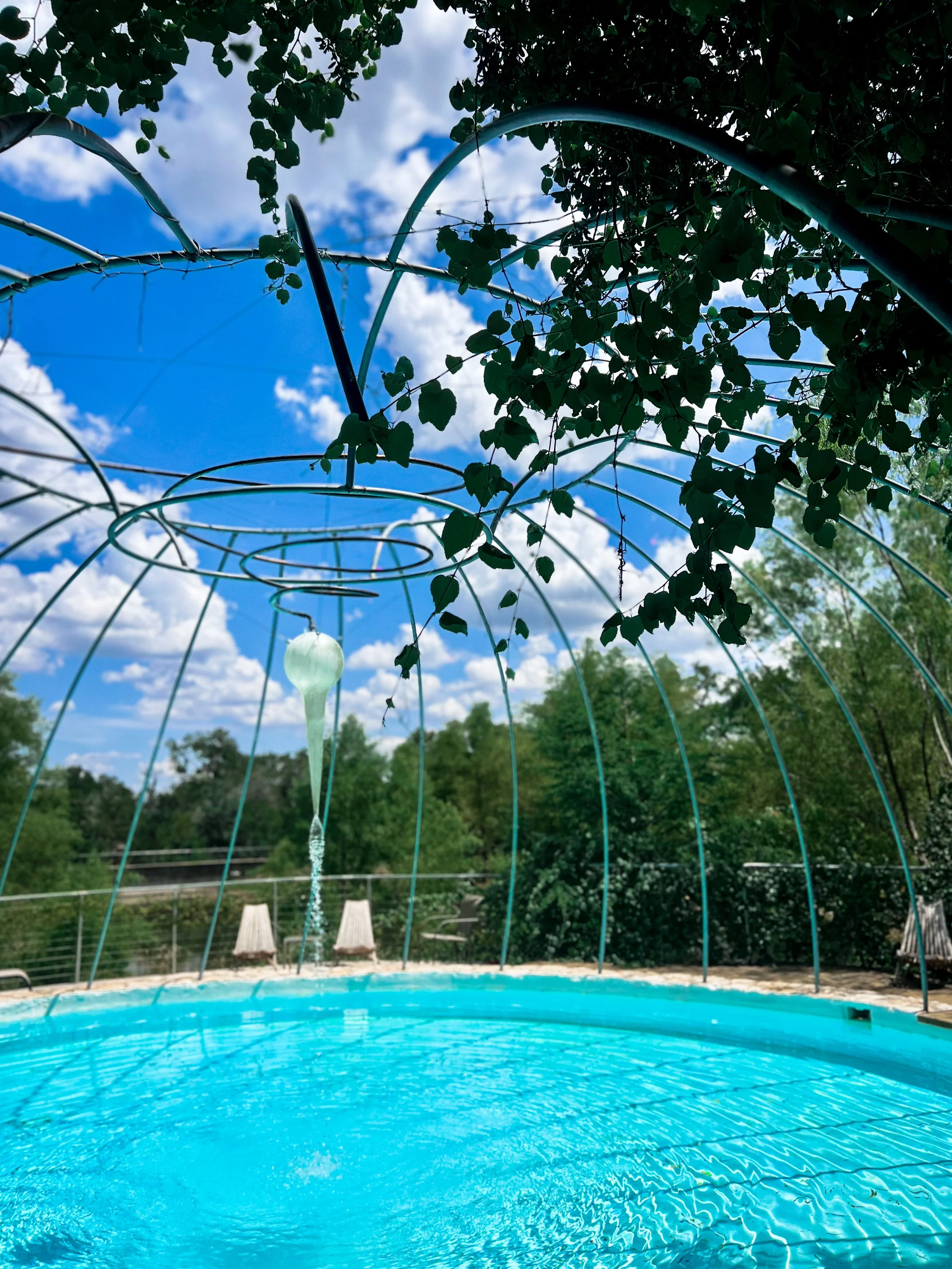
Near the Welcome Center, Cypress Valley has a shared pool area along with gas grills, hammocks, games and other communal amenities.
The pool is a nice option on a warm Texas afternoon, particularly if you've been spending the day exploring the property.
But there is also something amusing about having a pool available and realizing that you would rather stay in your treehouse.
That is the kind of place Cypress Valley is.
You arrive expecting to explore.
You discover that staying put is just as enjoyable.
The Landscape Is the Main Attraction
The property sits along a spring-fed creek surrounded by mature cypress trees, and the landscape changes with the seasons.
The official site encourages guests to explore the creek, relax in hammocks, swim in the pool or pond and watch the wildflowers in spring. At night, the trees and dark skies create a completely different atmosphere.
For us, though, the simplest moments were some of the best.
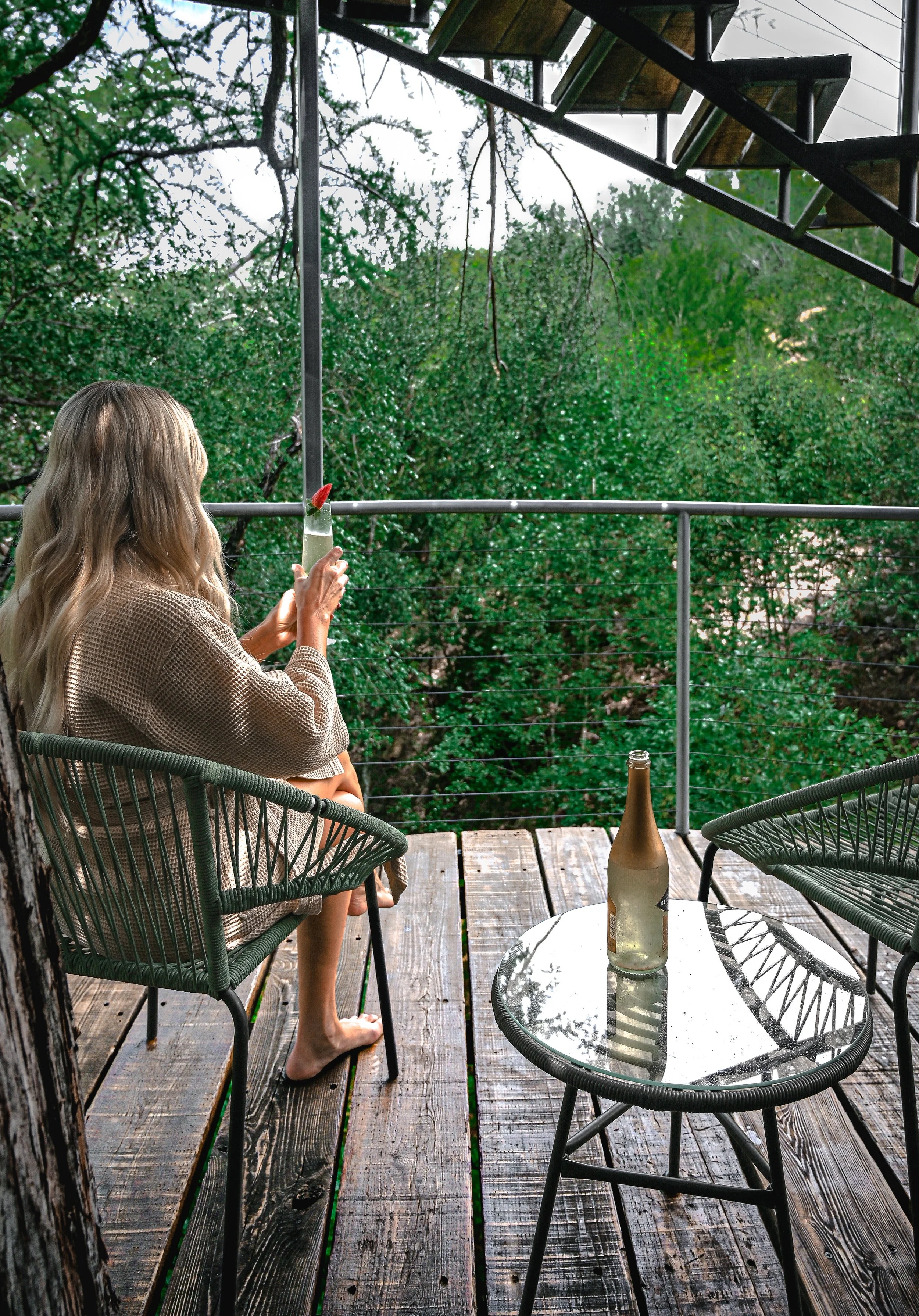
Sitting on the deck.
Having coffee.
Watching the light change through the trees.
Listening to the sounds below.
Those moments don't require an itinerary.
The Architecture of Yoki
Yoki is worth appreciating not only as accommodation but as a piece of treehouse architecture.
Artistree specializes in designing and building sustainable treehouses, and Yoki was conceived with sustainability and function at the center of the design. The structure uses natural and sustainably sourced materials, including Thermory spruce cladding, while the architecture was shaped around the existing trees and ravine.
The design also draws from Japanese minimalism and the idea of creating spaces that encourage people to look outward toward nature and inward toward themselves.
That philosophy comes through.
There is enough design to make the treehouse feel special, but not so much that the design becomes the focus.
The trees remain the star.
A Place With a Growing Following
Cypress Valley has attracted plenty of attention over the years.
Its treehouses have been featured in travel and design publications including The New York Times, Texas Monthly, Dwell, Field Mag and Austin Monthly, among others. The property has also appeared in television coverage, including HGTV's treehouse-focused programming.
The attention makes sense once you see the place.
Treehouse hotels have become increasingly popular, but there is something more substantial happening at Cypress Valley than simply giving people an unusual place to spend the night.
The property's appeal comes from the combination of architecture, conservation, family history and the experience of being genuinely surrounded by nature.
What to Bring
A stay at Cypress Valley benefits from a little preparation.
Bring food if you plan to cook in Yoki.
Bring comfortable clothes and shoes for exploring.
Bring a book.
And, most importantly, bring the mindset that you are going to be offline.
The property recommends arriving between 4 and 6pm so you have time to settle in and get familiar with the surroundings. Check-in itself is contact-free, with arrival instructions and a door code sent ahead of the stay.
The treehouses are also intended for guests aged eight and older, so families should keep that in mind when planning a visit.
Who Is Cypress Valley For?
Cypress Valley is particularly appealing to couples who want to escape the city for a romantic weekend, but it is broader than that.
It works beautifully for:
Couples looking for a memorable getaway
Anyone craving a digital detox
Nature lovers
Architecture and design enthusiasts
Travelers interested in sustainable tourism
Families looking for a different kind of outdoor experience
Anyone who simply needs to slow down
It is also a wonderful choice for people who think they are not "camping people."
Because this isn't traditional camping.
You get a proper bed.
You get a kitchen.
You get a private bathhouse in Yoki.
You get air conditioning and heating.
But you still wake up in the trees.
The Real Luxury Is Having Nothing to Do
There is a word that gets used far too easily in travel writing, but here it actually makes sense: luxury.
Not because Cypress Valley is about excess.
Quite the opposite.
The luxury is having an evening without notifications.
Having coffee without checking email.
Cooking dinner with someone instead of ordering room service.
Taking a bath while looking out at the trees.
Going to bed without the television on.
Waking up and realizing that the first thing you want to look at is the view.
It is a much quieter kind of indulgence.
Cypress Valley by Artistree is one of those places that sounds almost too good when you describe it.
A treehouse in the Texas Hill Country.
A spring-fed creek below.
A suspension bridge.
A private soaking tub.
No Wi-Fi.
No television.
Minimal phone service.
And yet, once you are there, it doesn't feel gimmicky.
It feels natural.
Our stay in Yoki was less about ticking off activities and more about settling into the surroundings. The small kitchen encouraged us to cook and stay in. The private bathhouse gave us a beautiful place to unwind. The deck became somewhere to sit with coffee and watch the trees.
And then there was the silence.
Not complete silence, of course. Cypress Valley has its own soundtrack: birds, insects, water and the occasional rustle in the trees.
But it is silence from the digital world.
The Beilharz family's original vision of sharing the land while respecting its natural character remains at the heart of the experience. Cypress Valley doesn't ask you to disconnect through some elaborate wellness programme.
It simply removes the things that keep you connected.
And once those things disappear, there is surprisingly little left to miss.
Just the trees.
The people you came with.
And time.
Sometimes, that is enough.
