
Dua Dari, Ubud: A Hidden Residence Shaped by Art, Nature and Time
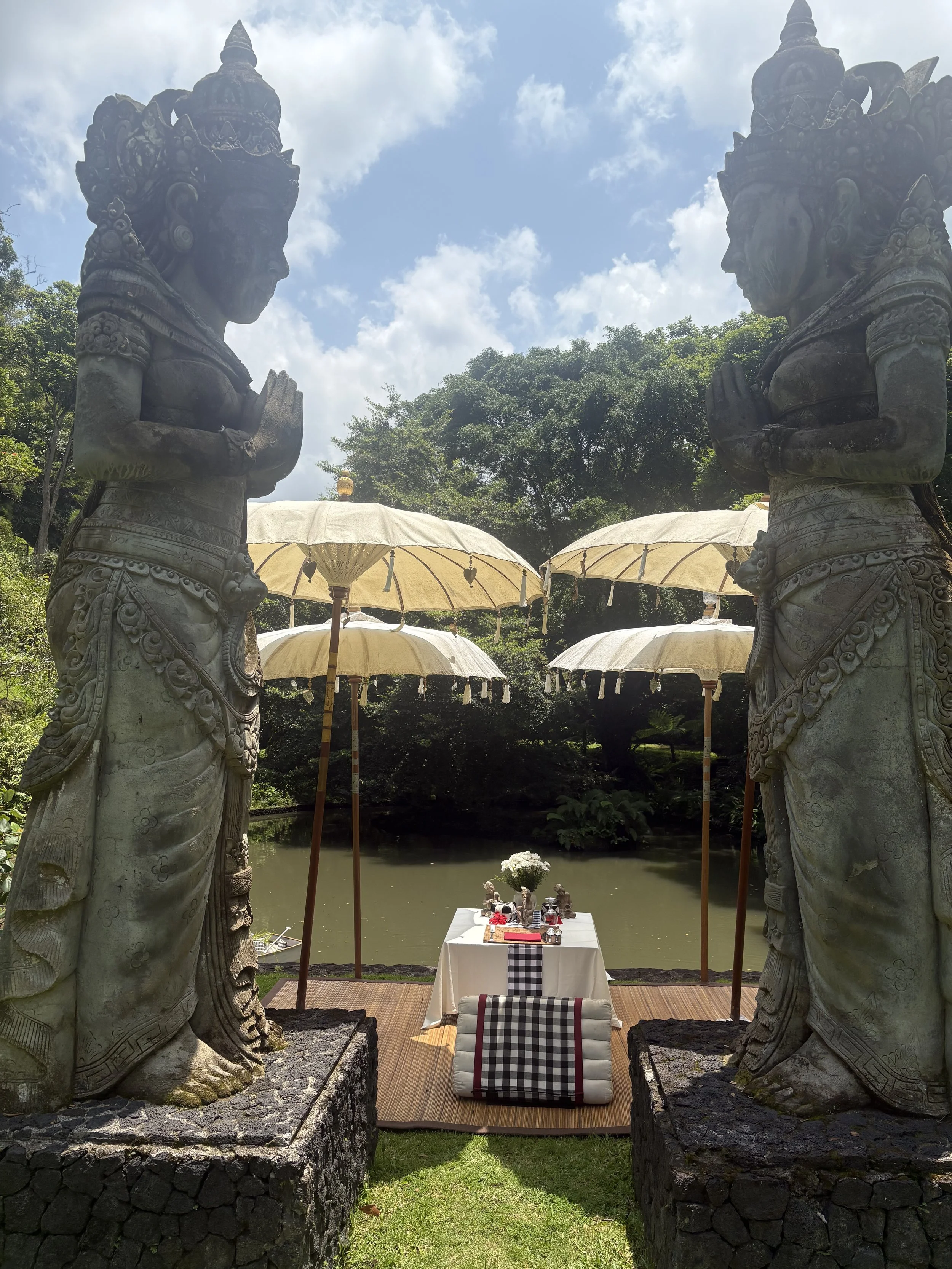
Tucked within the lush, layered landscape of Ubud, Dua Dari feels less like a hotel and more like a private world shaped by art, atmosphere, and a quietly enduring sense of charm.
It is not announced so much as discovered, revealed gradually through a winding approach and a subtle shift in pace. By the time you arrive, something has already softened.
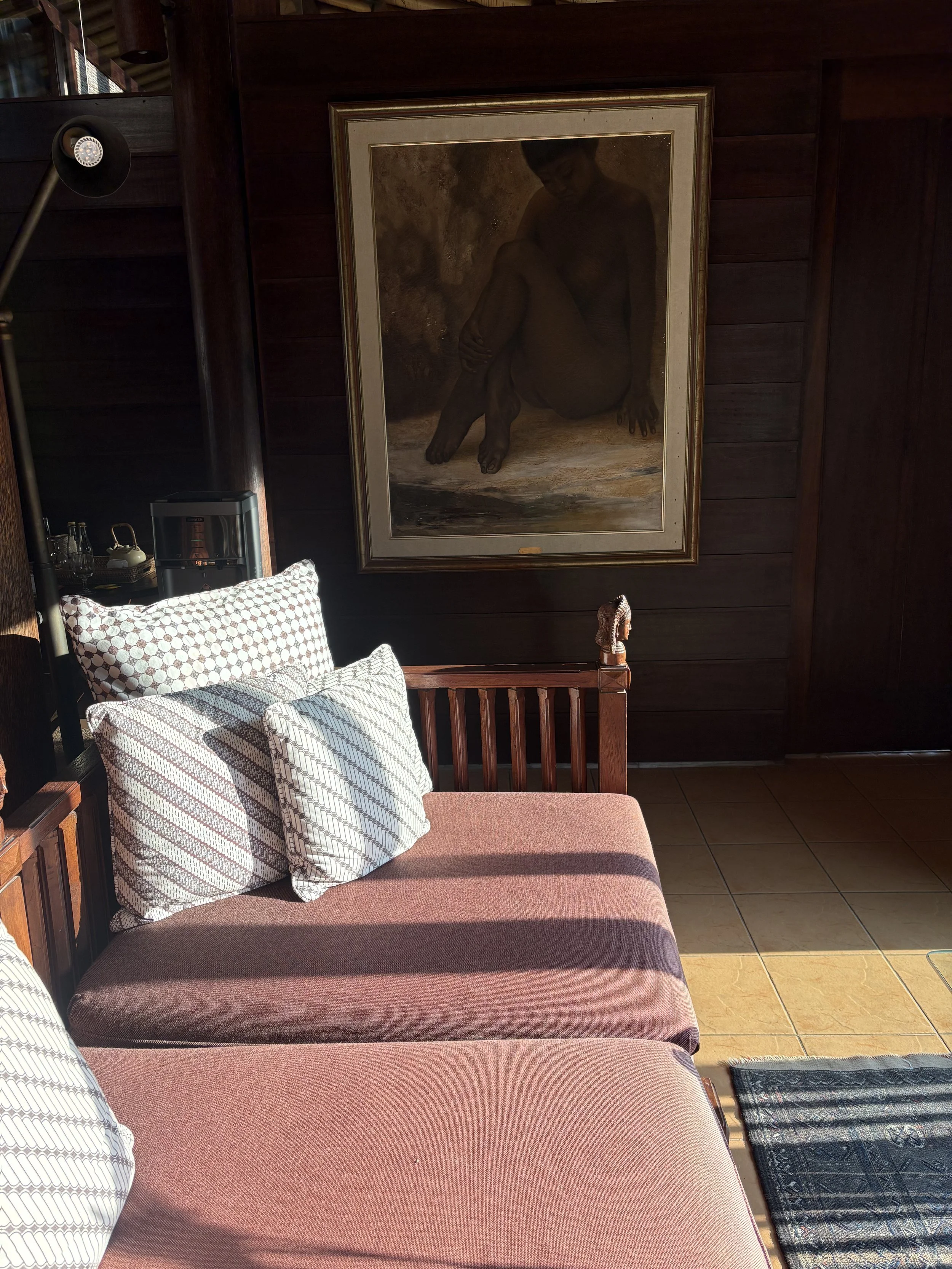
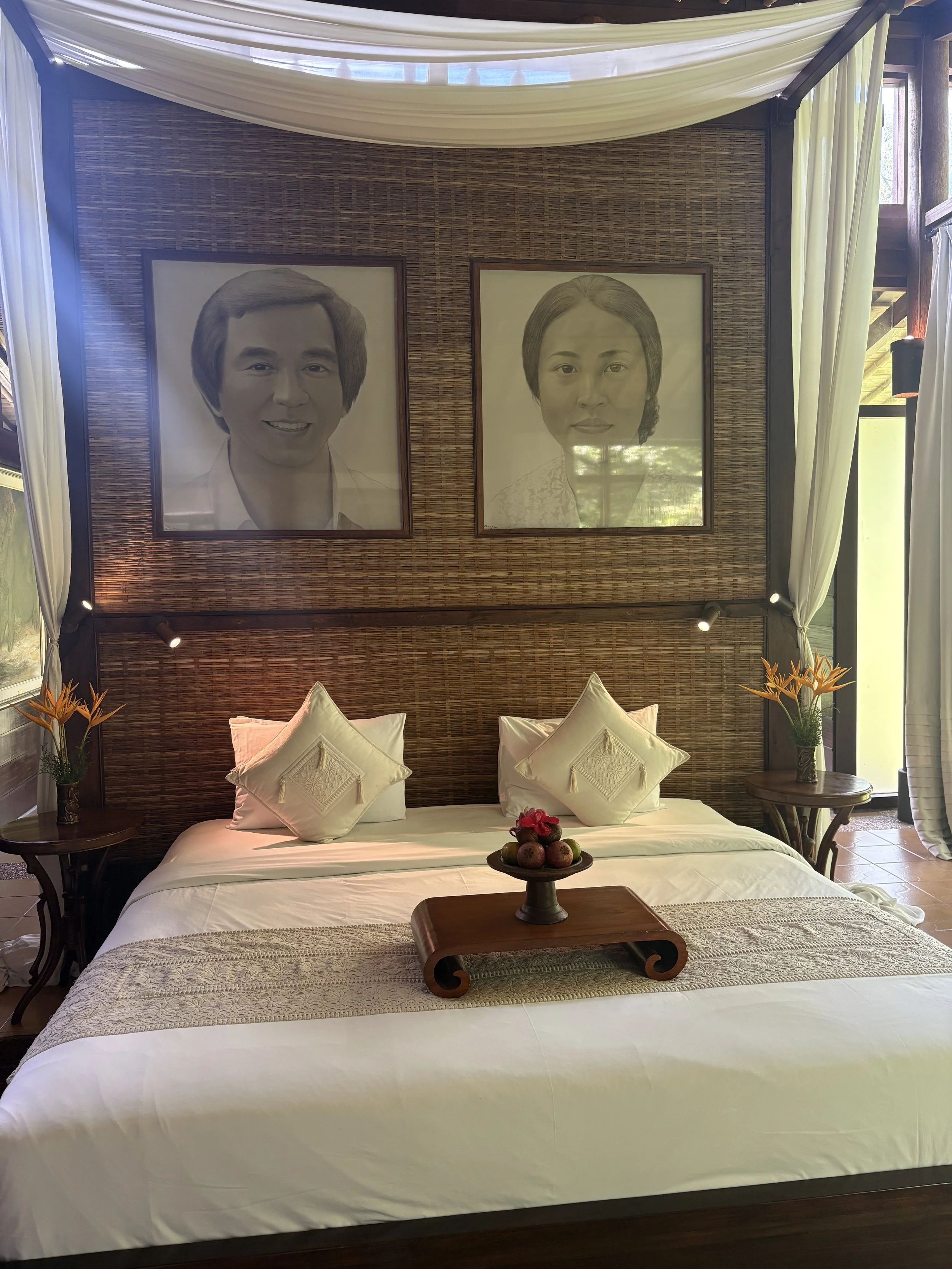
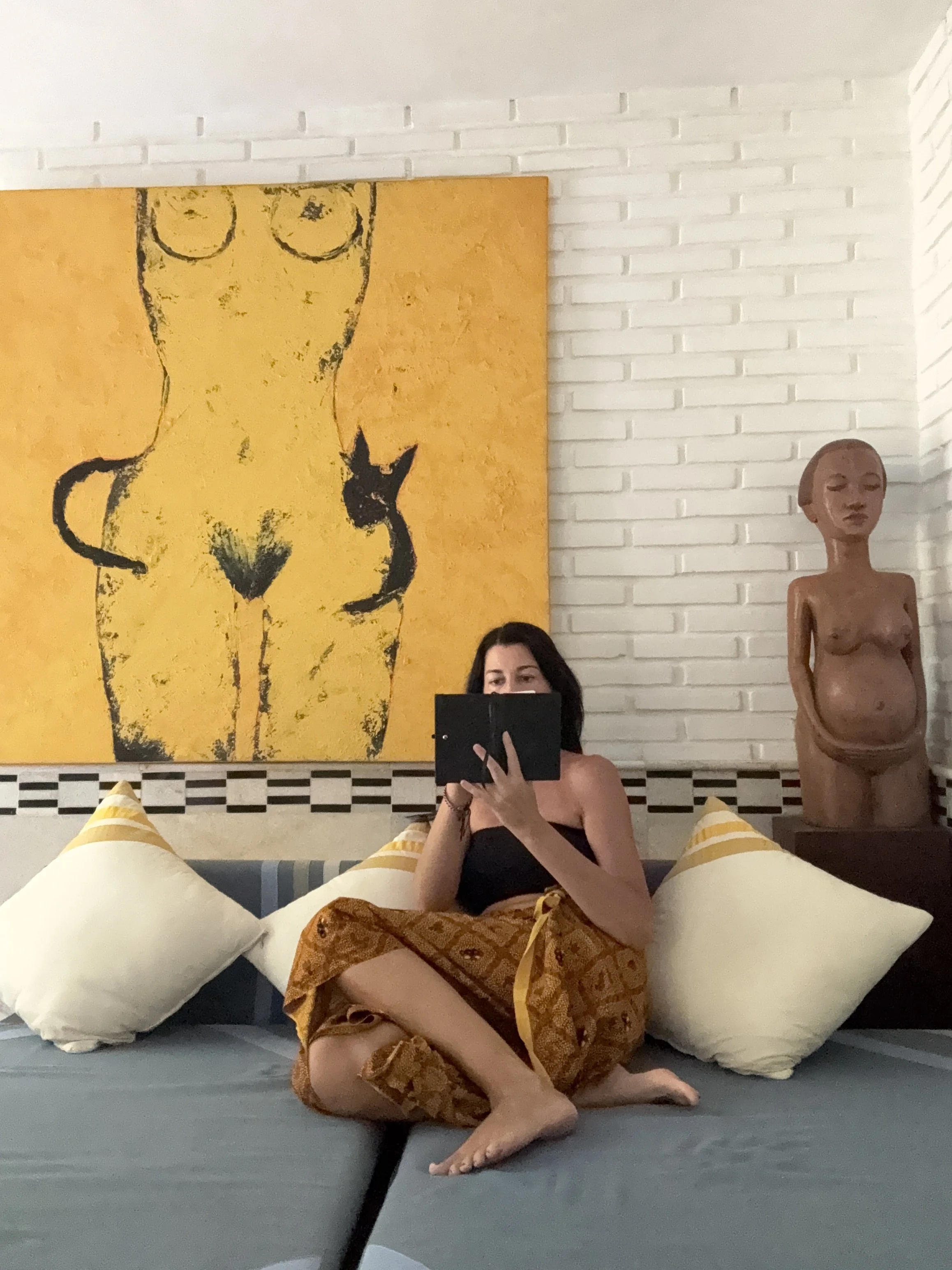
Originally conceived as a private residence for the Hadiprana family, Dua Dari carries with it the intimacy of a home layered with personal history. This is perhaps most powerfully expressed through its role as a living gallery, housing the personal art collection of Hendra Hadiprana. Across both compounds, artworks by renowned Balinese artists are not simply displayed but woven into the fabric of each residence, placed with a curator’s eye yet without formality. Paintings rest easily against textured walls, sculptures emerge quietly within corners of the space, and the overall effect is one of immersion rather than observation.
It lends the stay a particular kind of richness. This is not a hotel adorned with art, but a place where art has always belonged. The distinction is subtle, but deeply felt. Living amongst these works invites a slower, more attentive way of seeing, where mornings begin not only with light filtering through the trees but with the quiet presence of creativity itself.
The architecture follows a similar philosophy. Set within a generous stretch of greenery alongside the Petanu River, the property unfolds across two distinct compounds, each offering its own dialogue with the surrounding environment. One opens gently onto rice fields, expansive and luminous, while the other is immersed within dense jungle, where the air feels cooler and more introspective. Moving between them is less a transition of place and more a shift in mood, from openness to enclosure, from outward gaze to inward reflection.
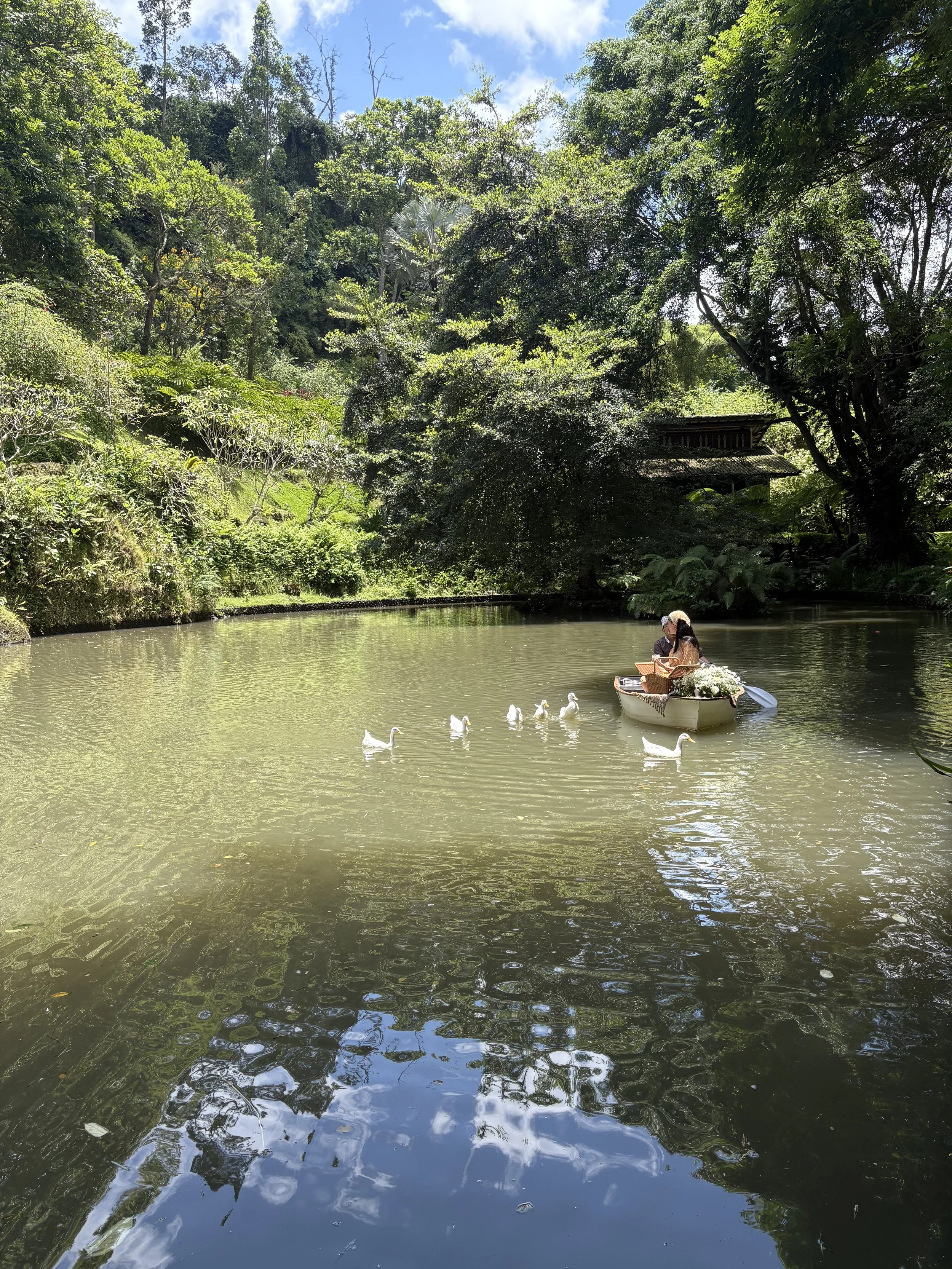
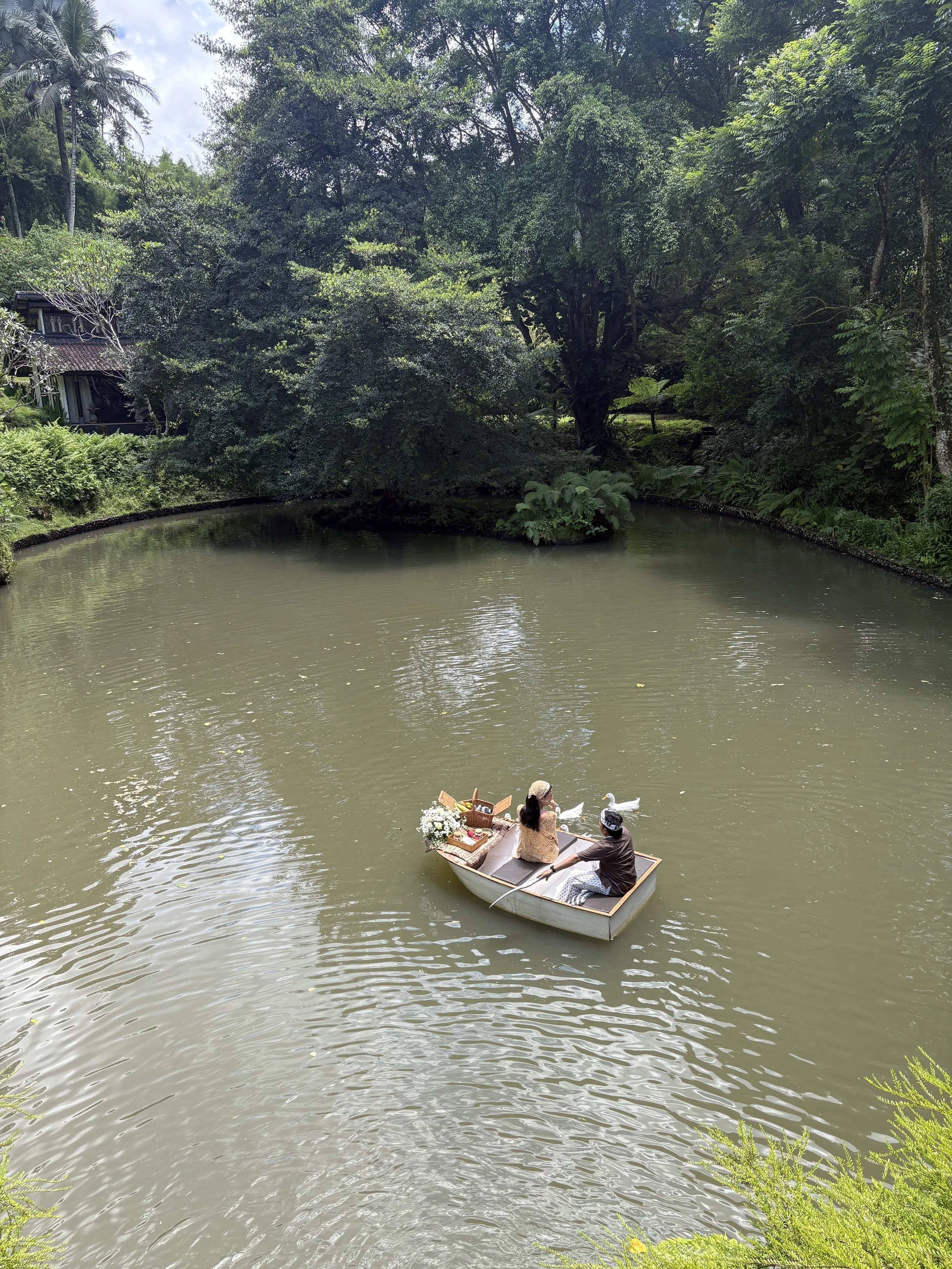
There is a natural rhythm to life here. Days are unstructured, guided more by light and feeling than by schedule. Pathways wind through the grounds, leading to pockets of stillness that feel discovered rather than designed. At the heart of it all sits the boating lake, a setting that captures the spirit of Dua Dari in its most charming form.
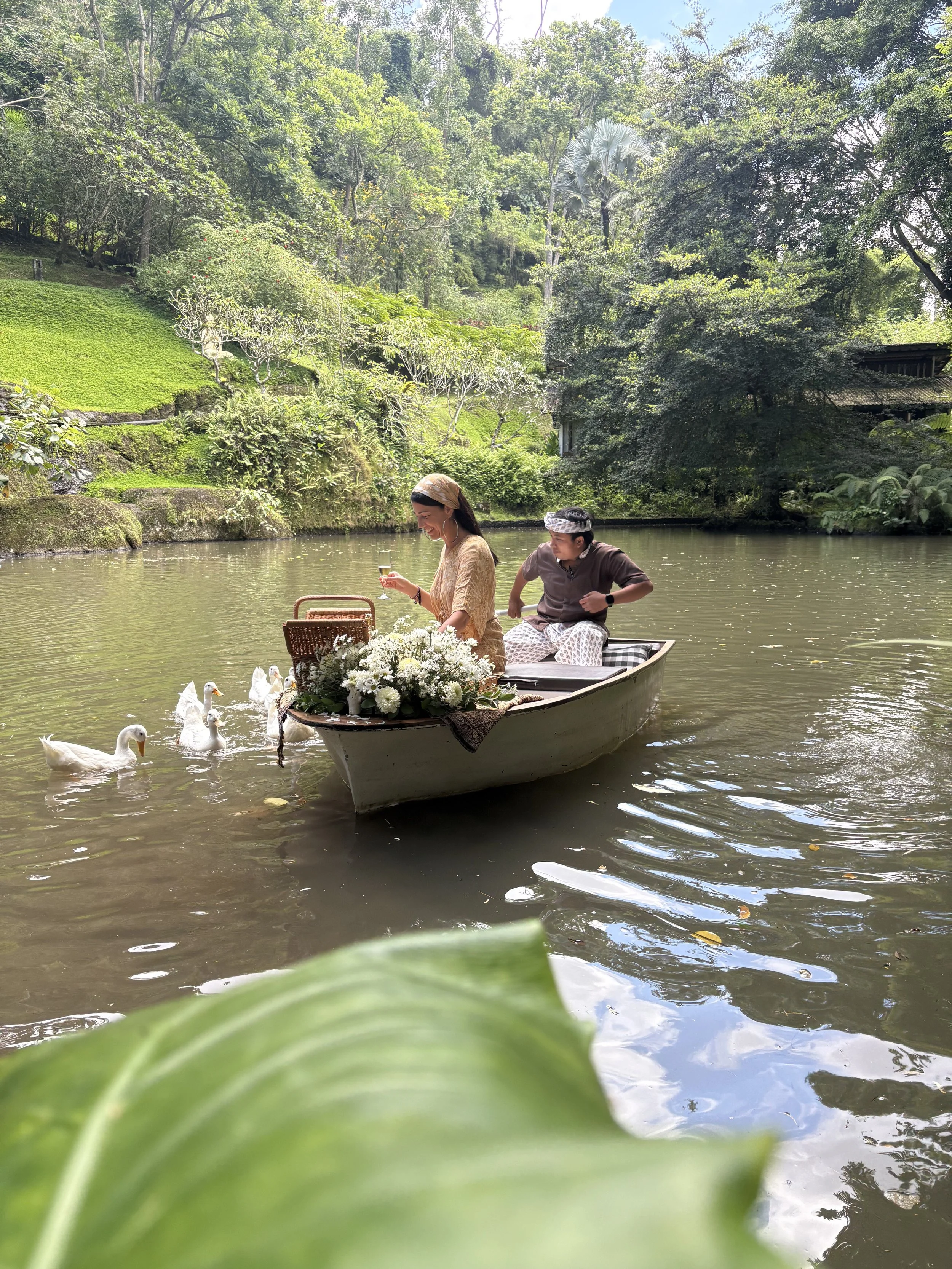
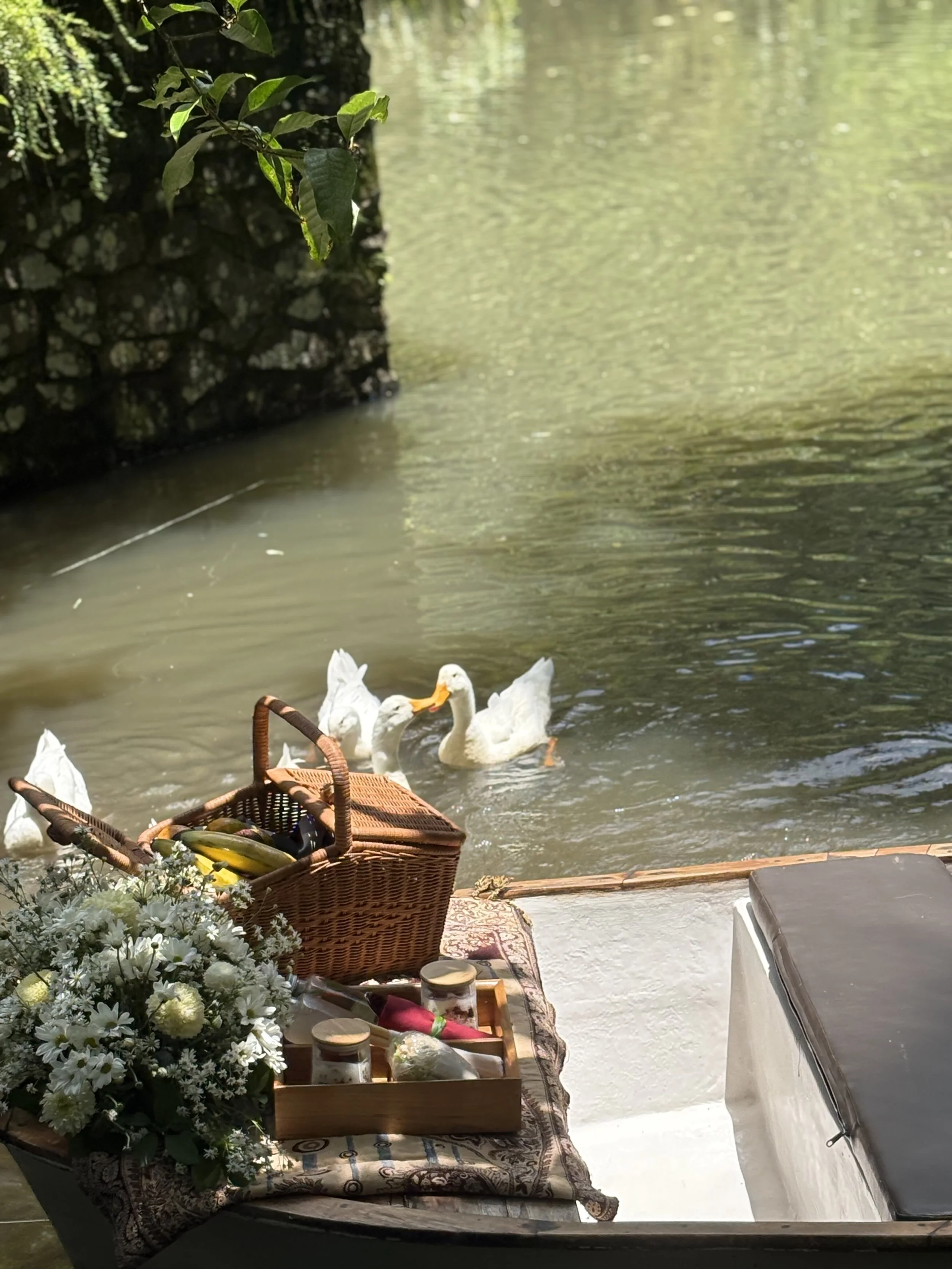
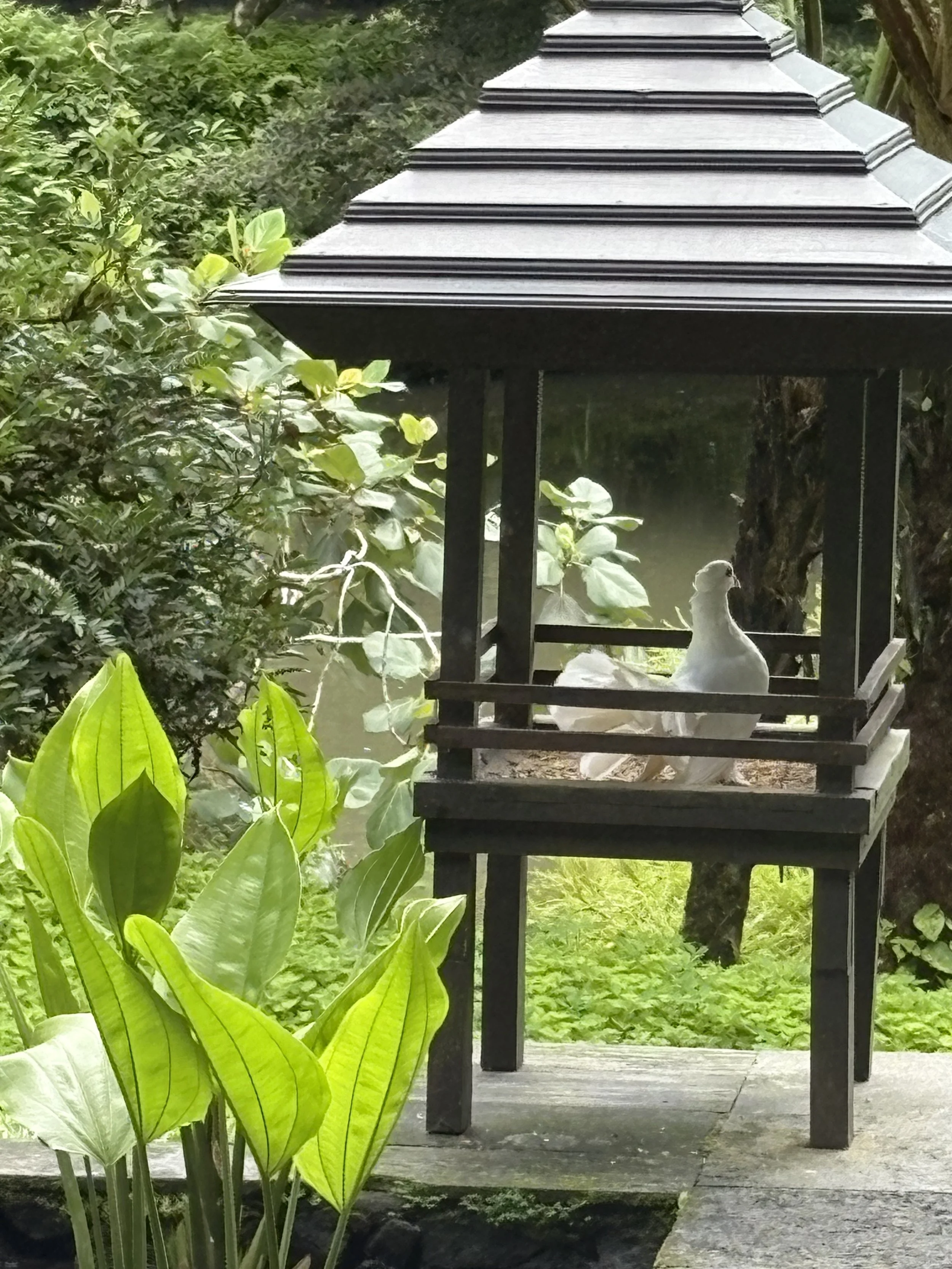
A small wooden boat drifts across the surface, often accompanied by a gathering of ducks that seem entirely at home in this quiet, curated landscape. Picnic baskets appear almost effortlessly, set against a backdrop of greenery that feels both considered and untouched. There is something undeniably nostalgic about the experience, a return to a simpler kind of pleasure where time slows and presence becomes the only real agenda.
The ducks, gliding across the water or gathering curiously at the edge, lend a sense of lightness to the moment. It does not feel staged, yet there is an ease to it that feels almost cinematic. Sitting here, surrounded by still water and soft movement, the experience becomes less about activity and more about immersion. It is a kind of luxury that does not seek to impress, but to gently transport.
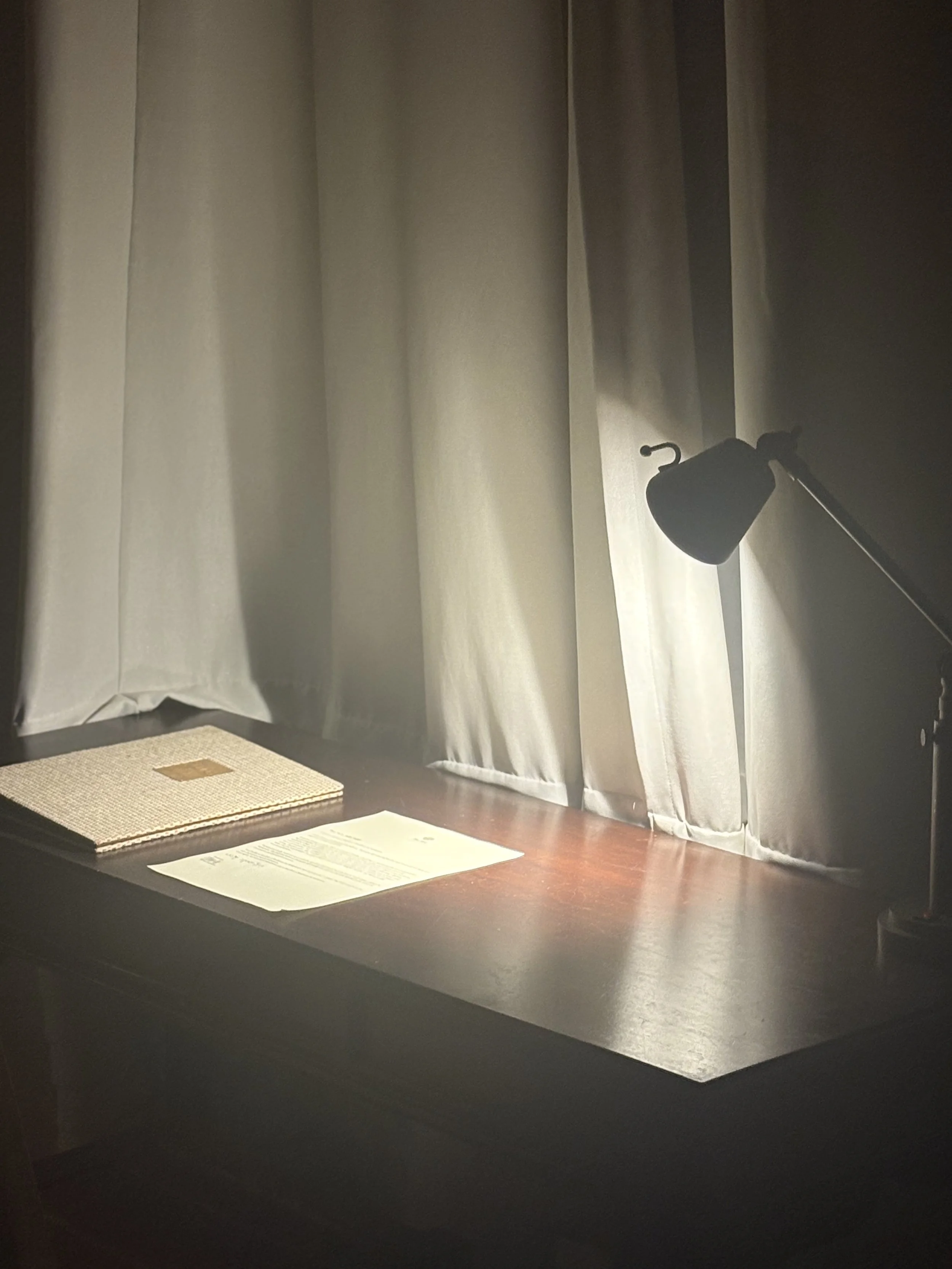
Elsewhere, the property continues to unfold in quiet layers. Interiors are tactile and considered, blending warm woods, handwoven textiles, and natural stone in a way that feels both grounded and refined. Nothing is overly polished. Instead, there is a softness to the spaces, a sense that they have been lived in and shaped over time. It allows guests to settle quickly, to feel less like visitors and more like temporary custodians of the space.
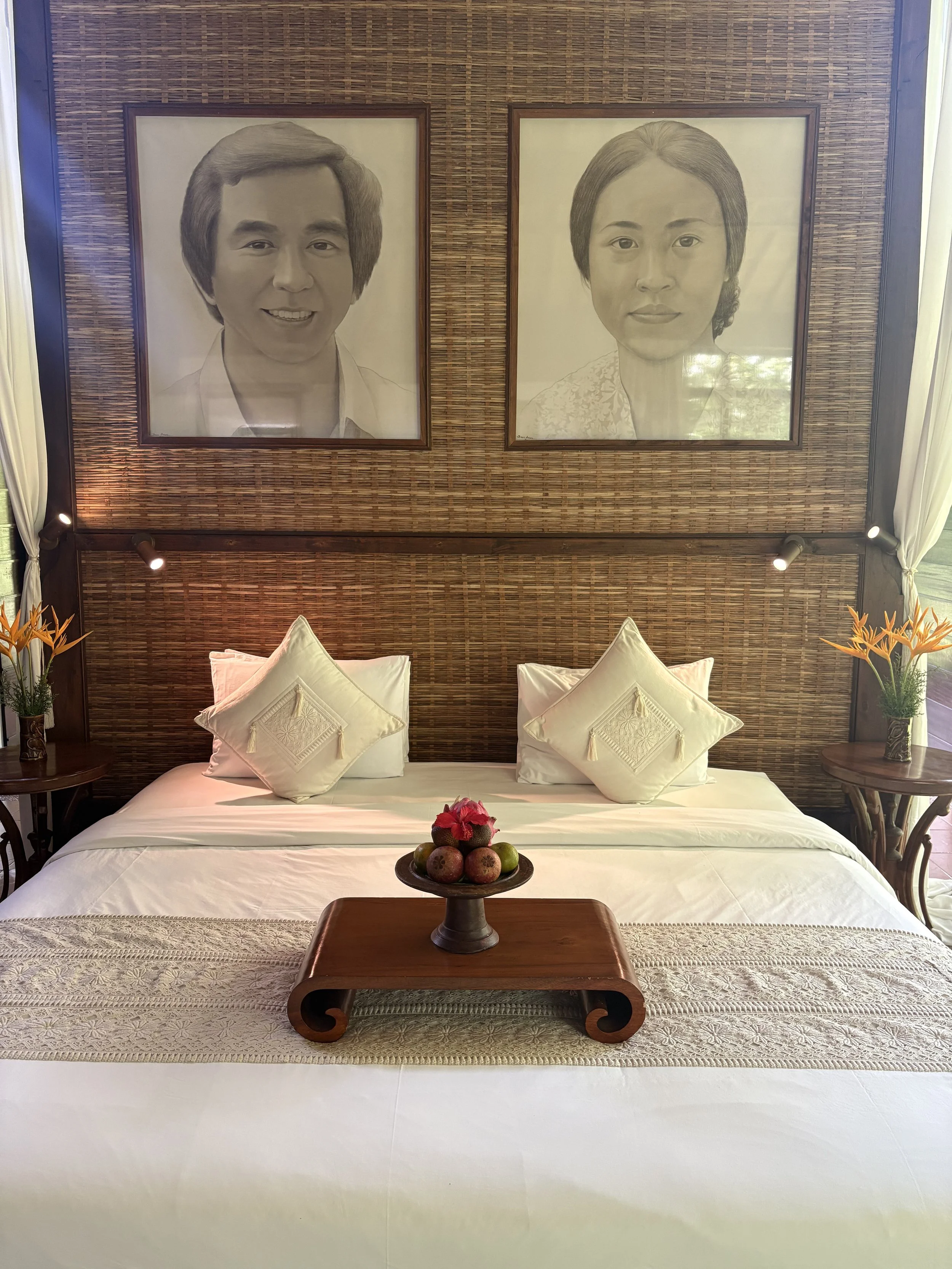
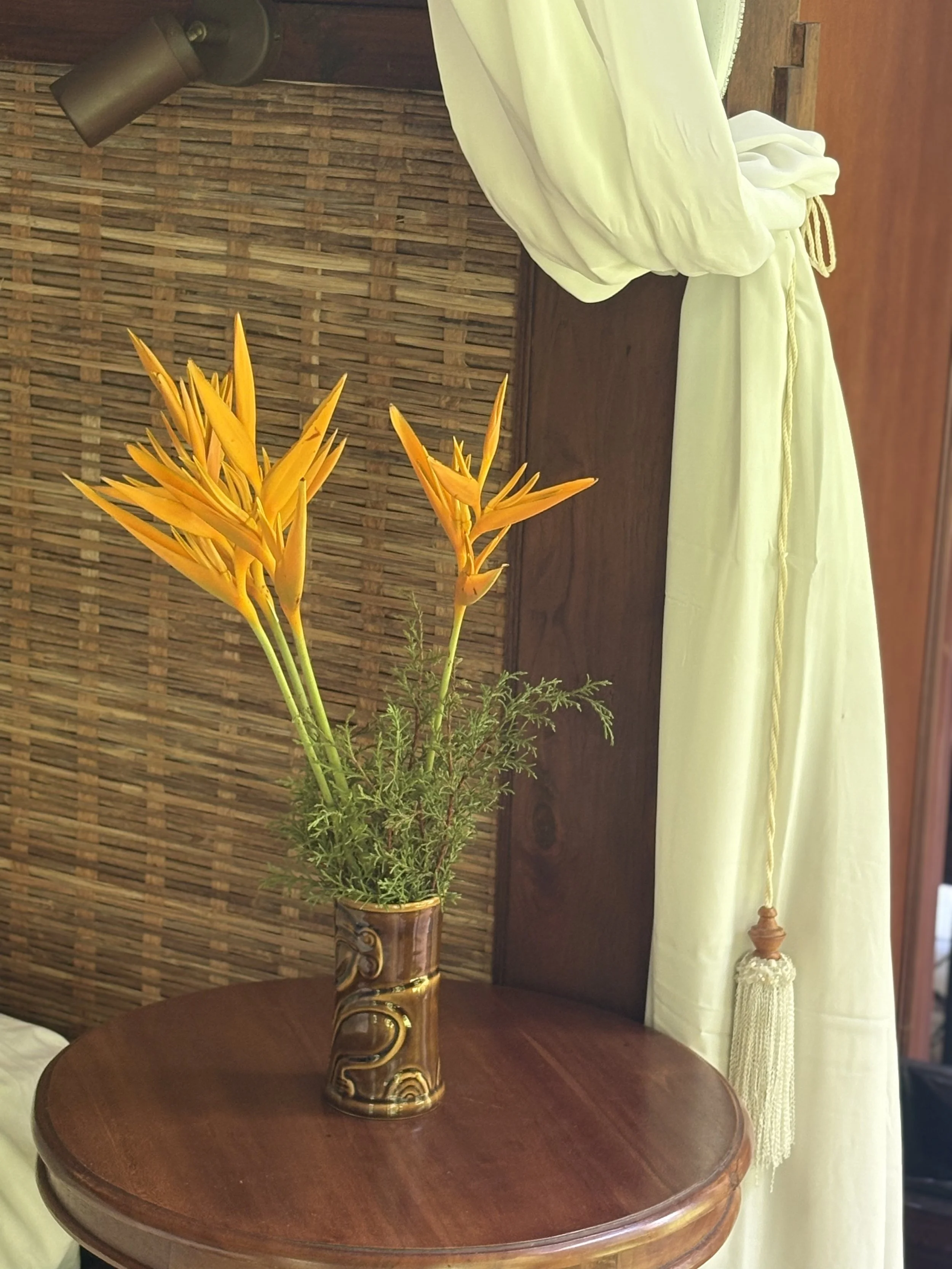
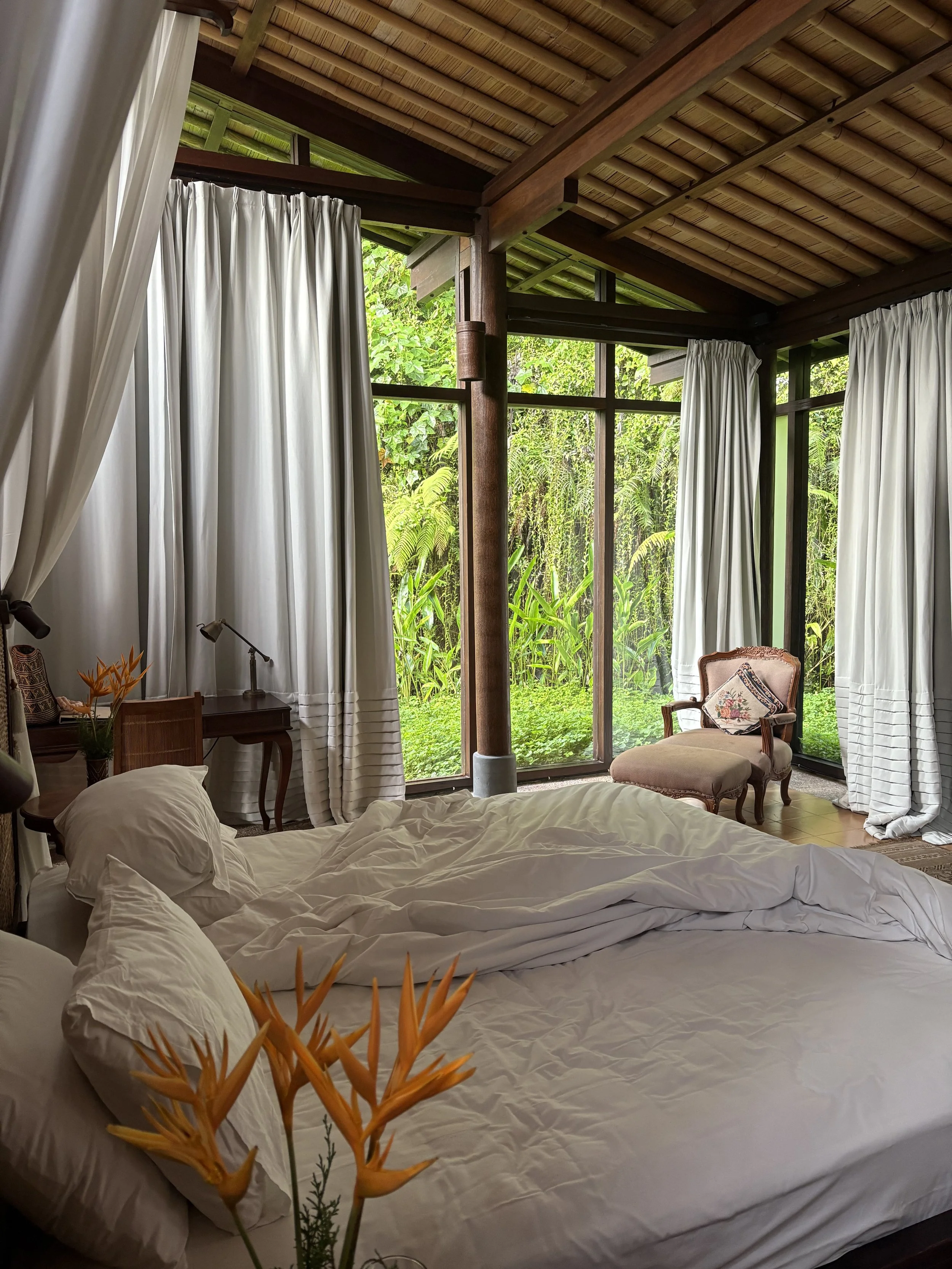
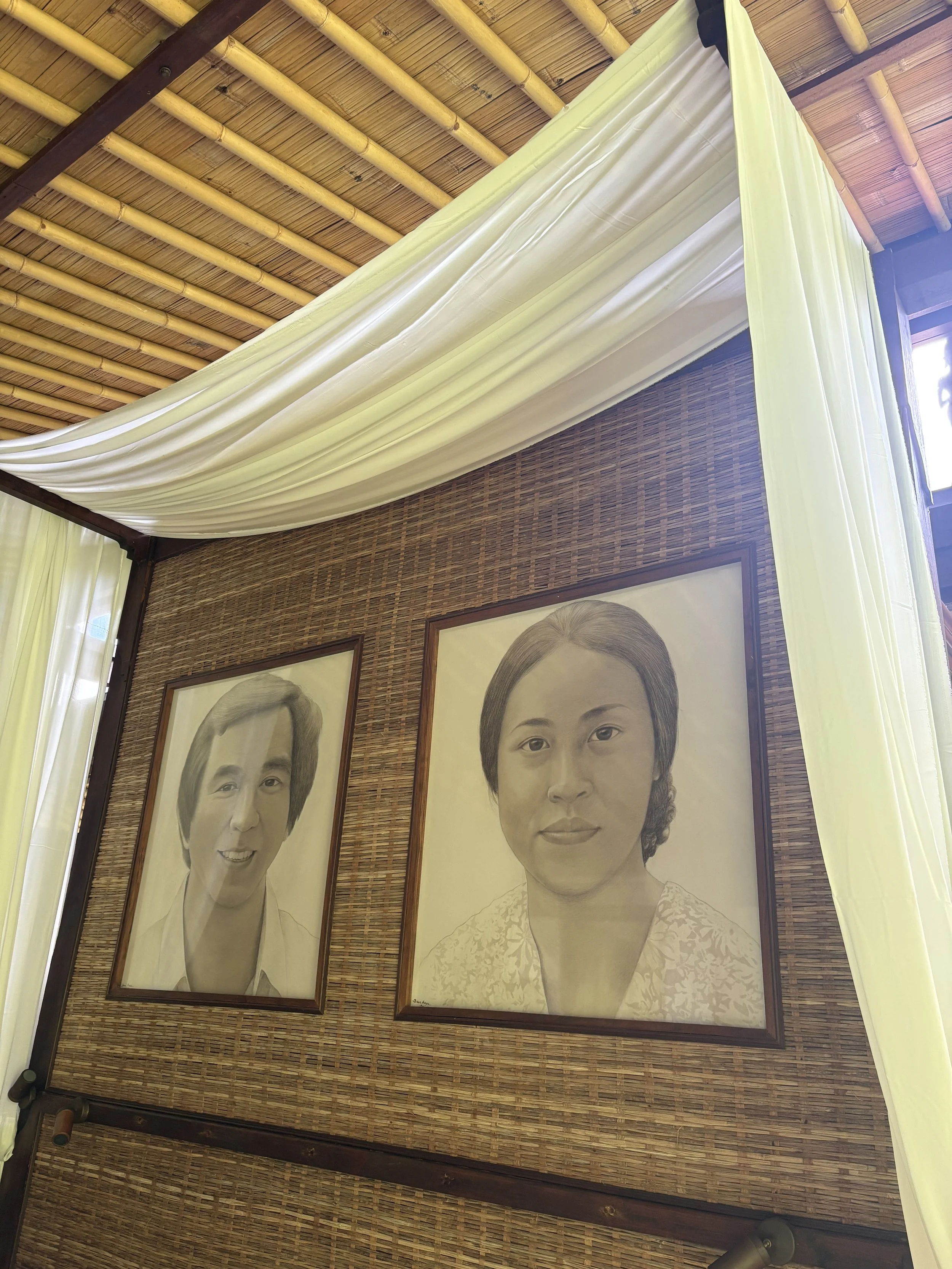
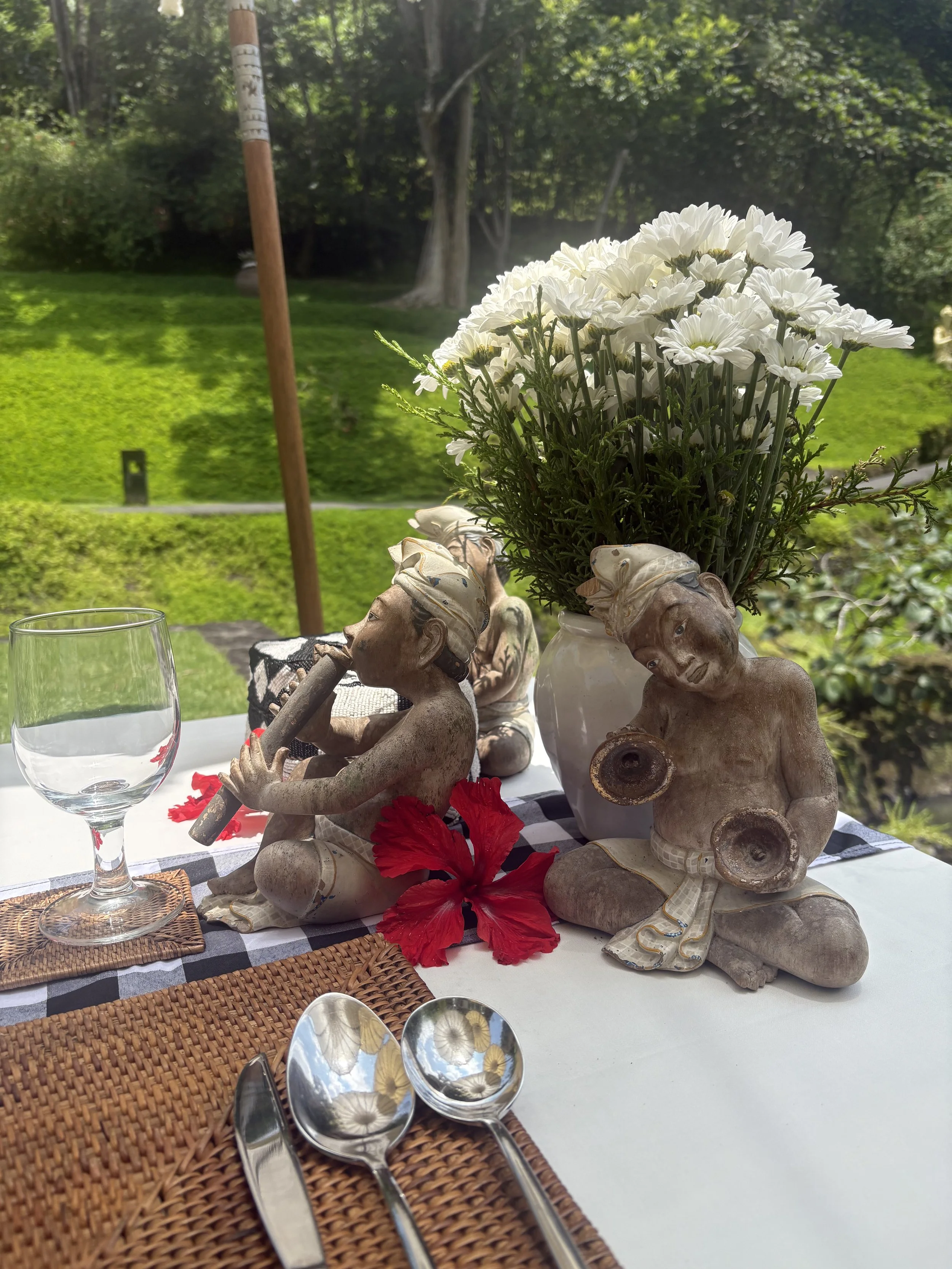
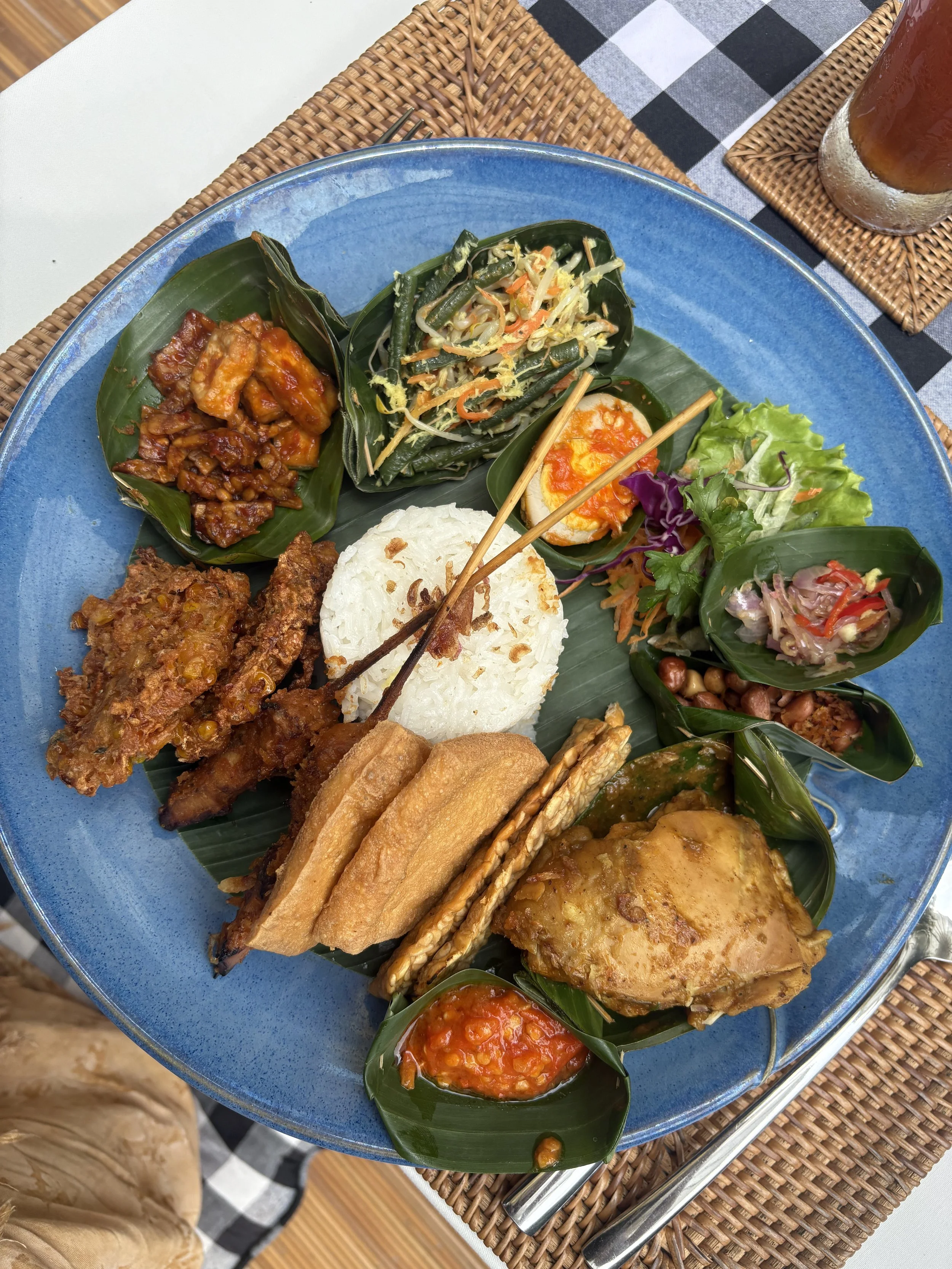
Despite its sense of seclusion, Dua Dari remains deeply connected to the cultural and creative rhythm of Ubud. It reflects the area’s quieter essence, one rooted in artistry, ritual, and a deep respect for nature. This is not Ubud at its most commercial, but at its most contemplative. Inspiration reveals itself in the details, in the way light moves across a painting, in the distant sound of the river, in the gentle unfolding of the day.
What lingers most is not any single feature, but the feeling the space leaves behind. The presence of Hadiprana’s collection, the stillness of the jungle, the simple pleasure of a picnic by the lake as ducks drift past without urgency. Each element contributes to a broader sense of calm, of quiet richness that is felt rather than declared.
In a landscape abundant with luxury stays, Dua Dari offers something more personal. It is a place where design is not just aesthetic, but emotional. Where art is not an addition, but a foundation. Where charm, in its purest form, is allowed to lead.
Long after leaving, it is this atmosphere that remains. A sense of having stepped into a world where beauty is quieter, time moves differently, and the most memorable moments are often the simplest ones of all.
