
Slow, Intentional, Elemental: A Stay at HOSHINOYA Ubud
There are hotels that sit lightly on the land, and then there are those that seem to grow from it. HOSHINOYA Ubud belongs firmly to the latter. Perched above a sacred river valley in the emerald folds of Bali’s interior, the resort is threaded through the island’s ancient subak irrigation canals, a UNESCO-recognised system that has nourished rice paddies and spiritual life for centuries. Here, water does not merely decorate the landscape; it defines it.
The approach is cinematic. A narrow path winds through dense jungle before opening onto a series of elevated wooden walkways suspended above the valley floor. Below, water rushes and glints in the dappled light. Around you, the rainforest hums. And then, as if revealed by the mist itself, geometric Japanese pavilions appear, angular, restrained, and impossibly serene against the wild tangle of green.
This is not a typical Balinese resort, nor is it a transplanted Japanese ryokan. Instead, HOSHINOYA Ubud is a thoughtful dialogue between the two cultures, a meeting of Japan’s reverence for ritual and Bali’s deep spiritual ecology.
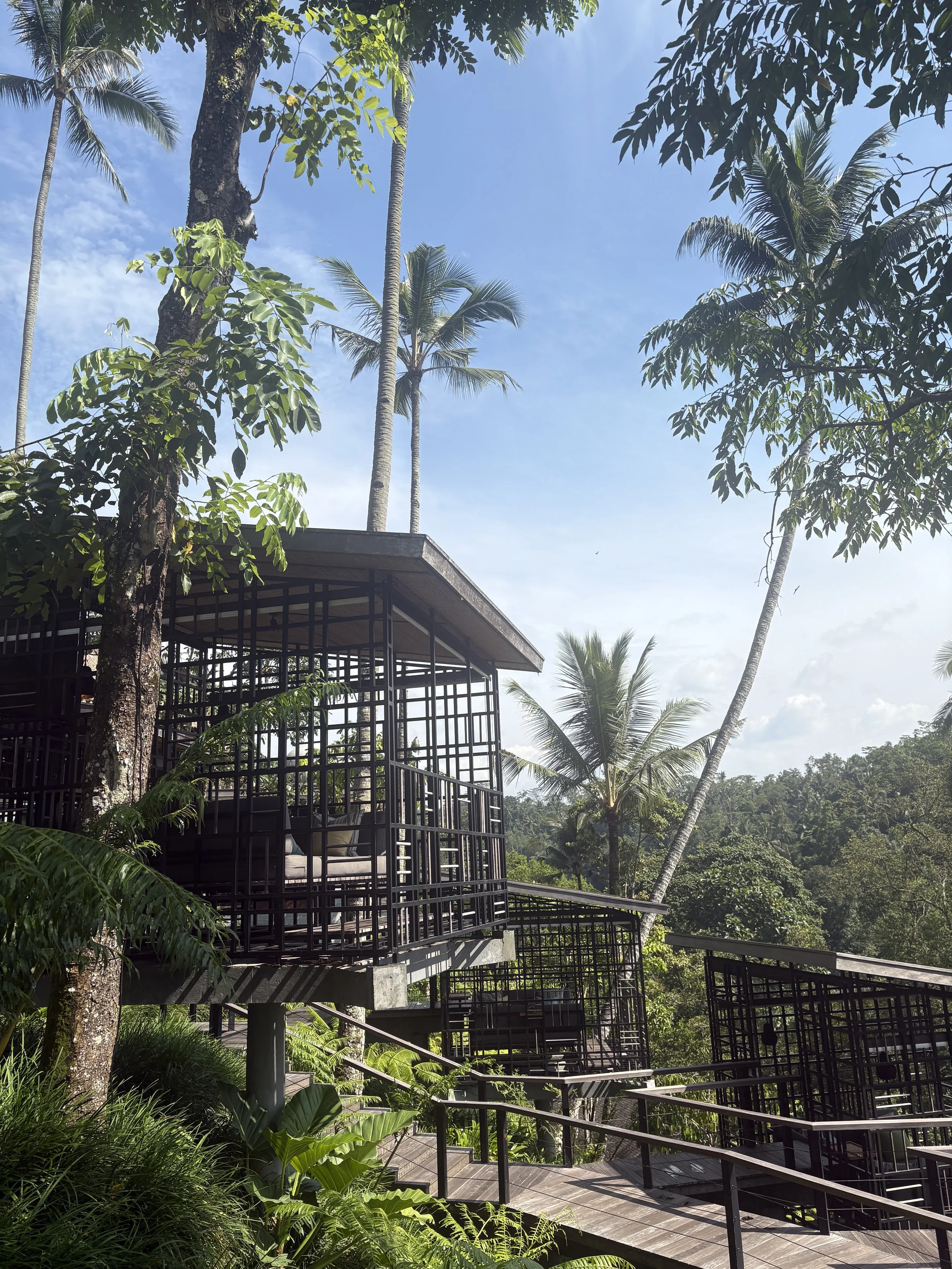
Design: Where Geometry Meets Jungle
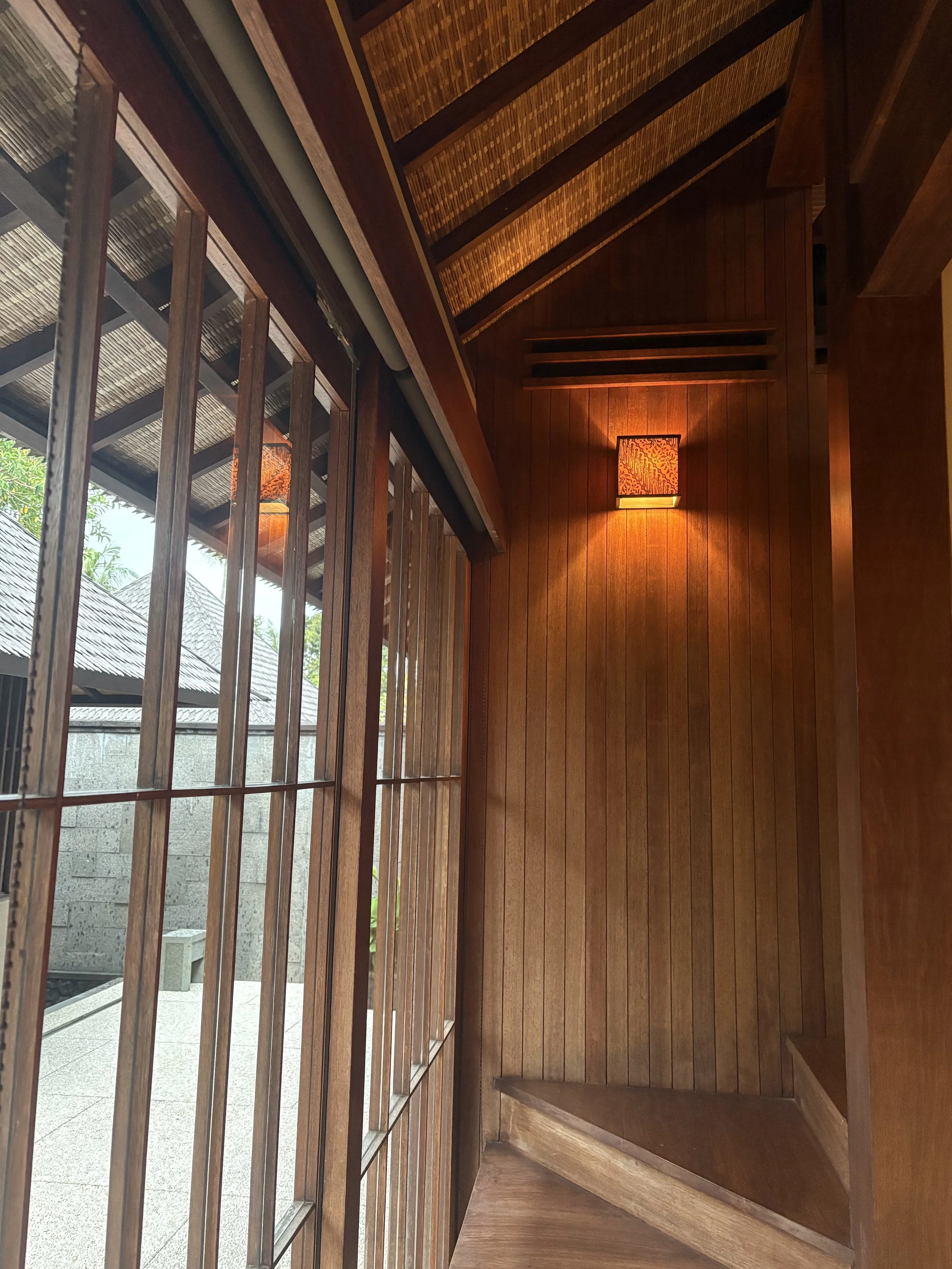
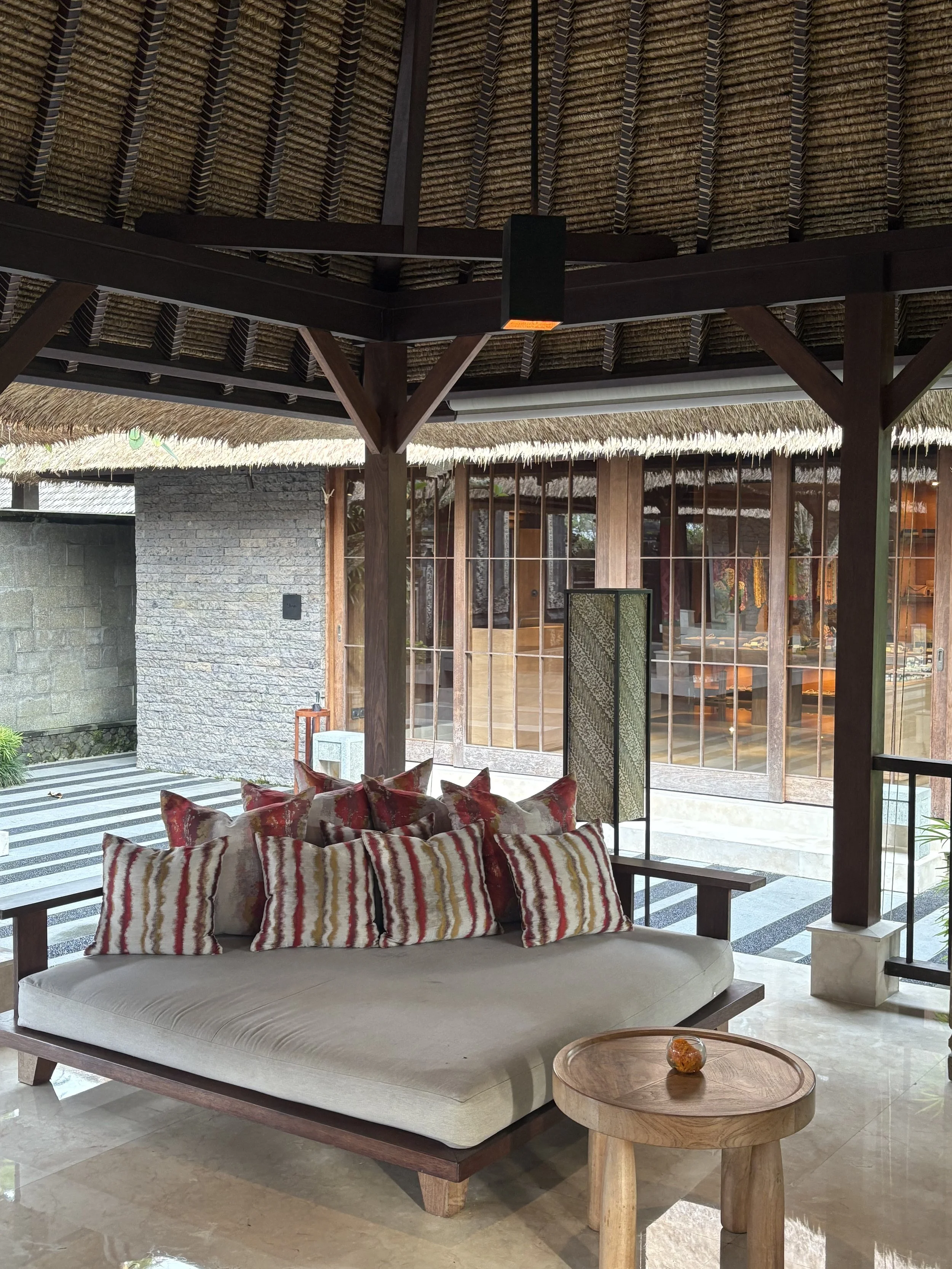
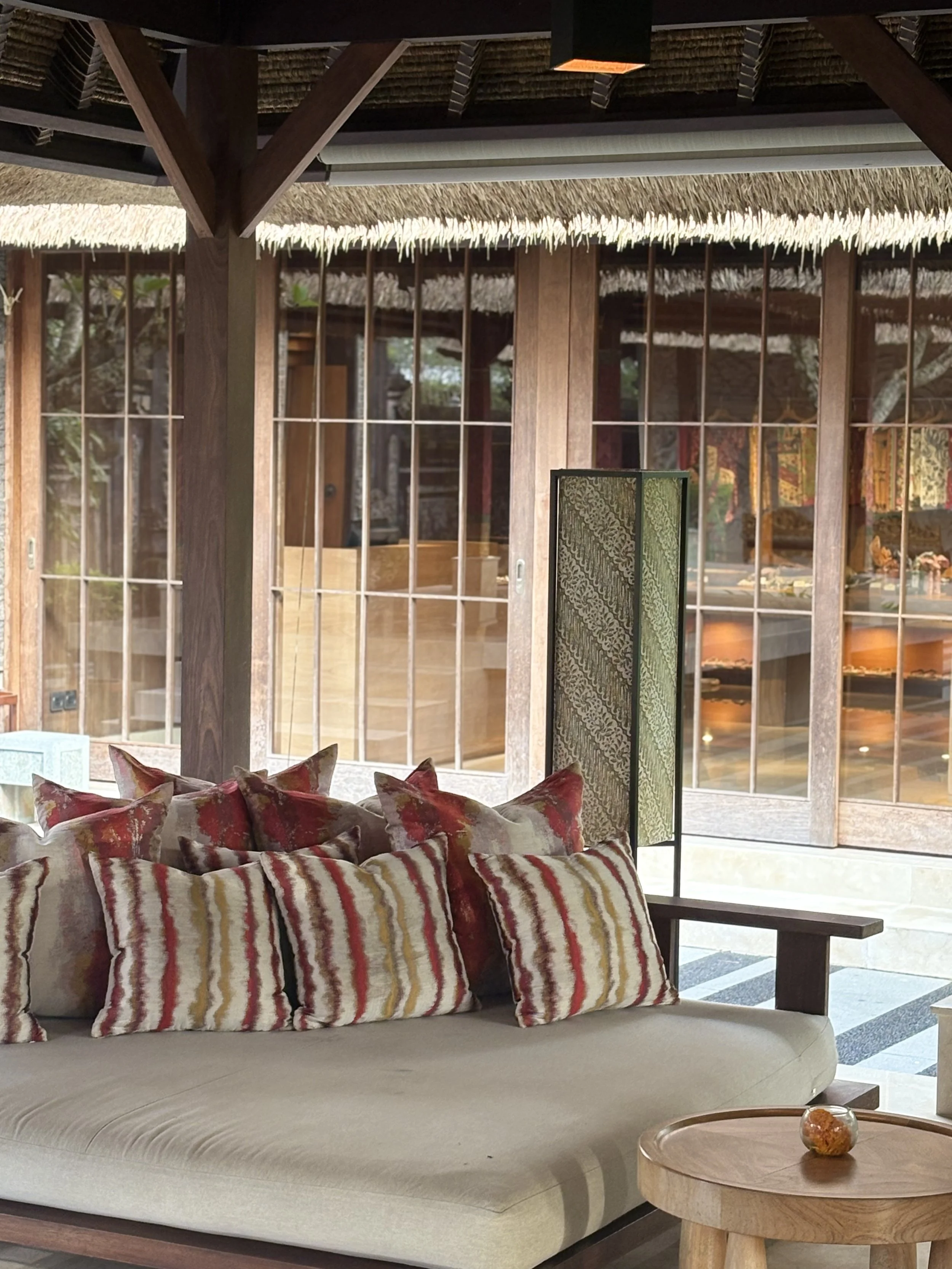
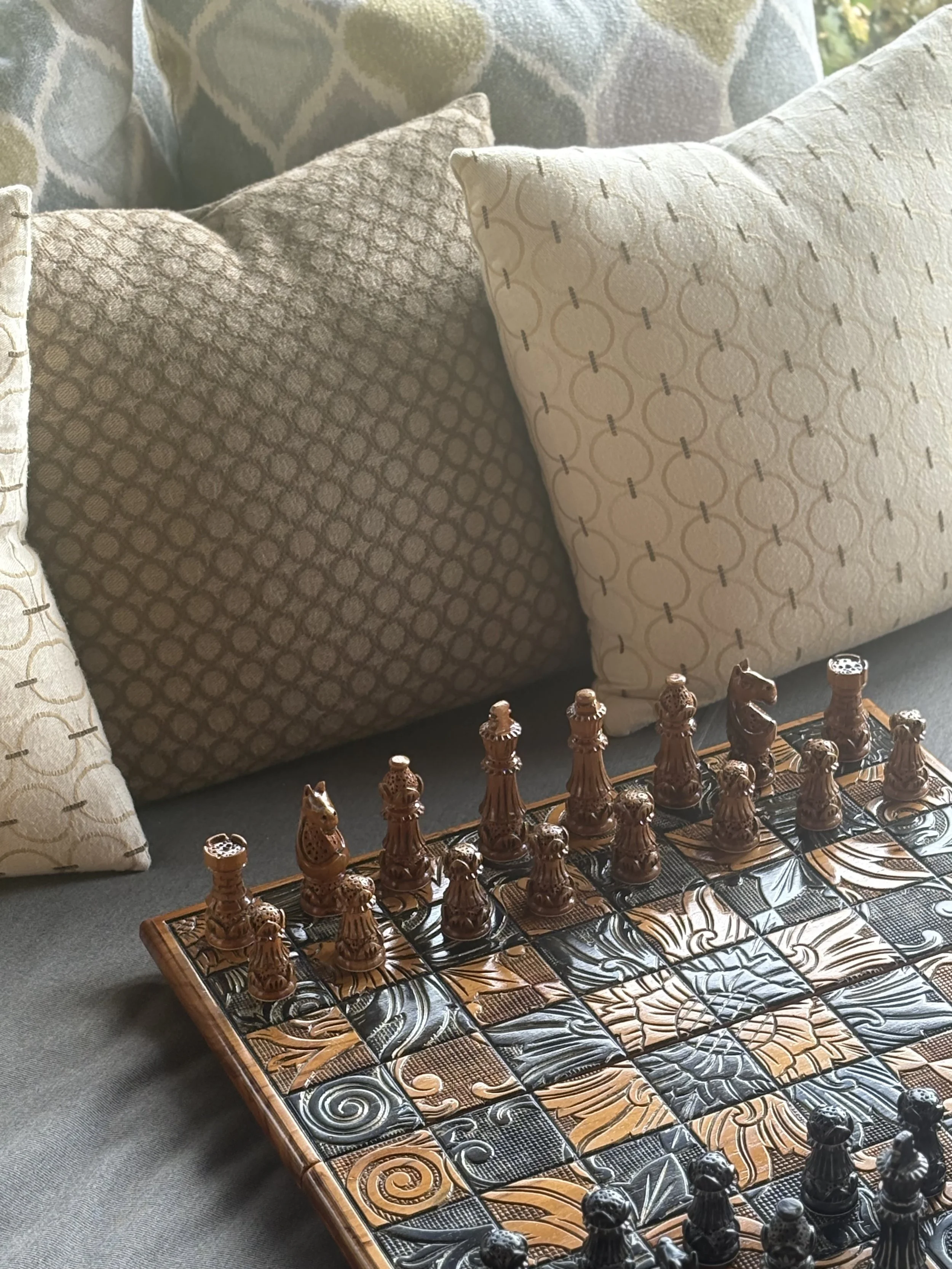
The villas are arranged along the flowing canals, each one positioned to feel both private and porous to nature. Interiors lean into Japanese minimalism with low-slung furniture, clean lines, sliding screens, and a palette of soft neutrals. Look closer, and you’ll notice hand-carved Balinese woodwork, woven textiles, and subtle nods to local craftsmanship.
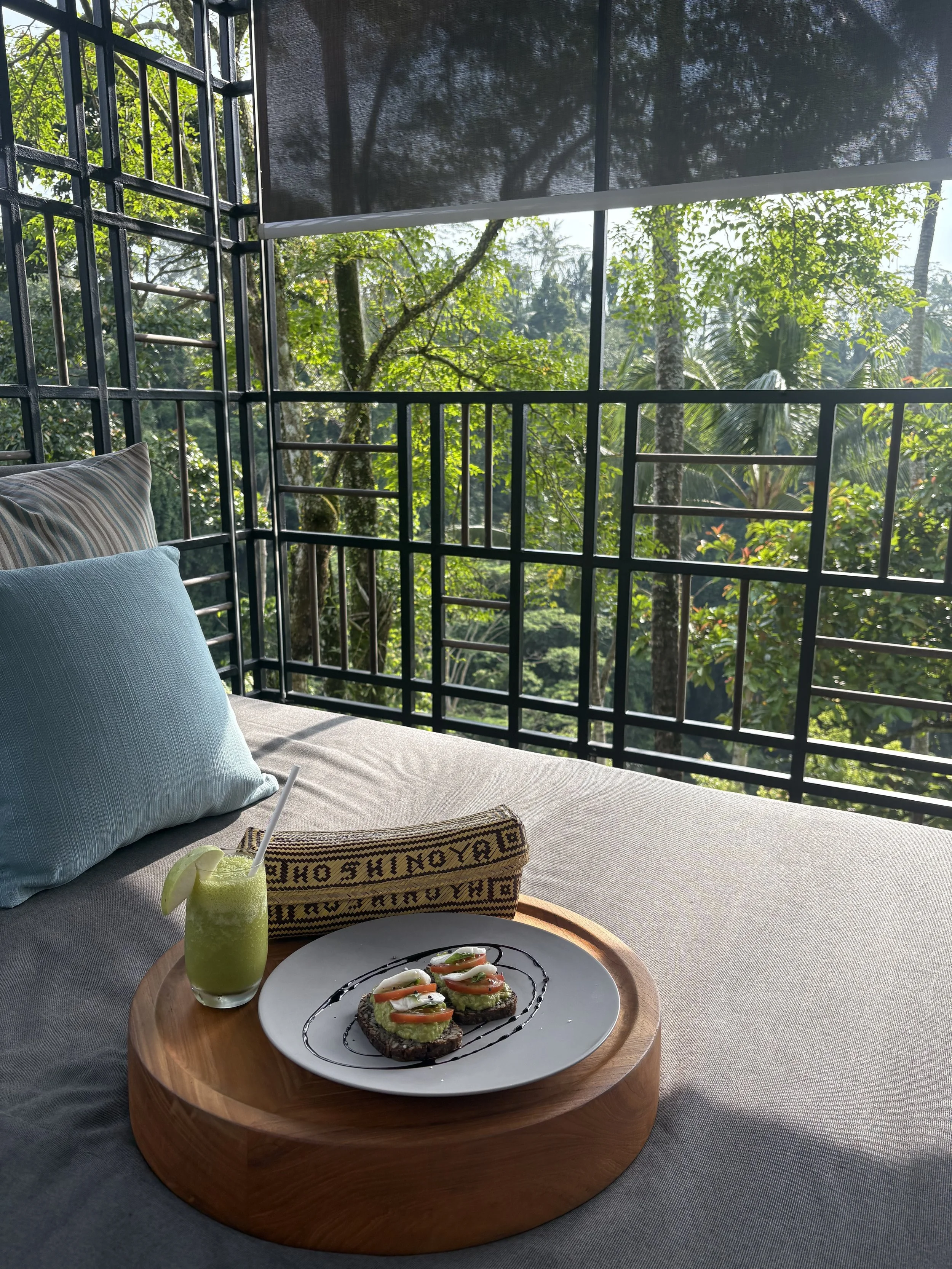
The effect is quietly powerful. Light filters through latticework panels in shifting patterns. Open-air living spaces dissolve into private gardens. Sunken daybeds are tucked into pockets of greenery. Nothing feels excessive; everything feels considered.
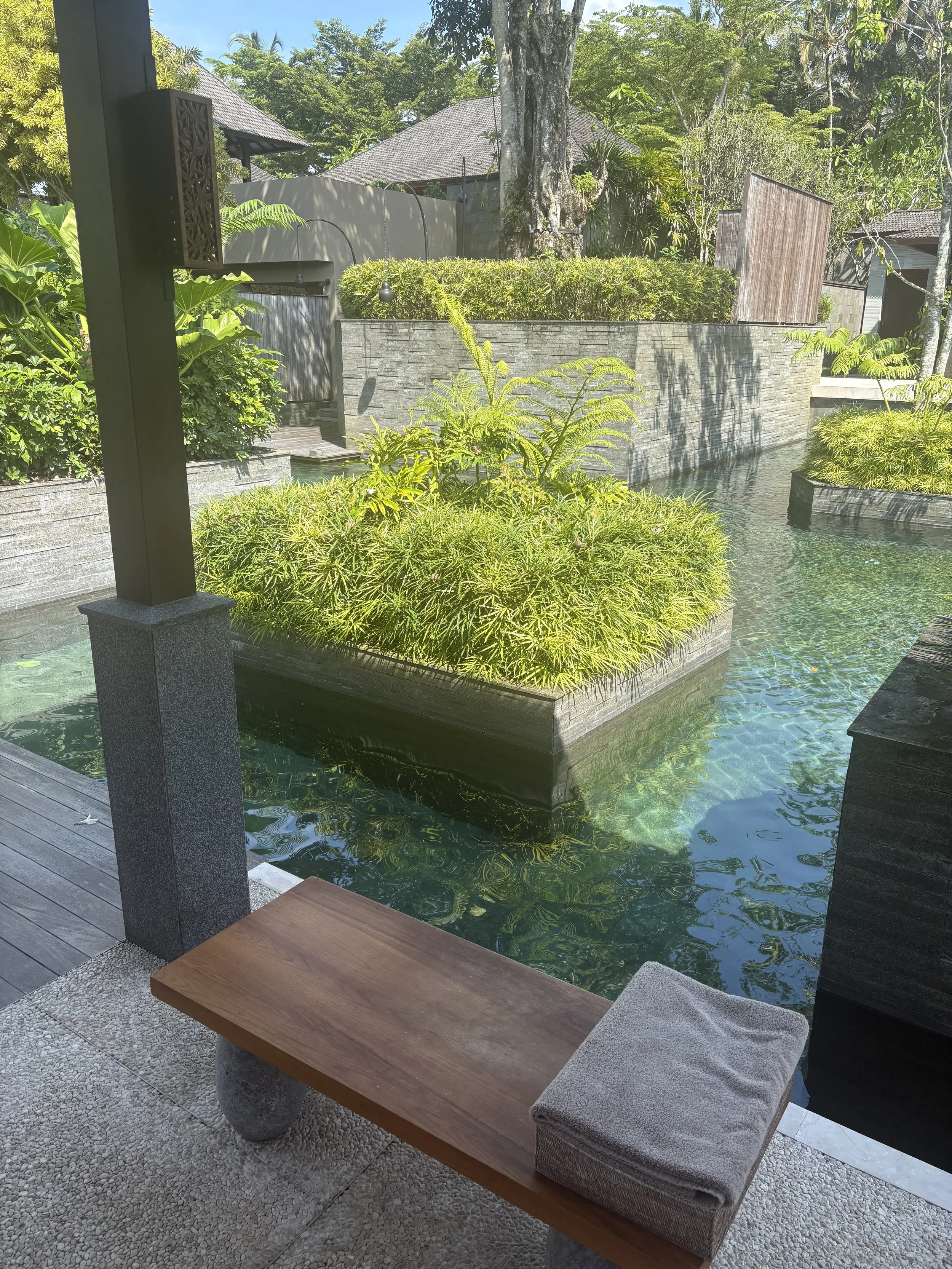
Even the resort’s pools feel architecturally intentional. Rather than one central statement pool, HOSHINOYA Ubud features three long, parallel swimming pools that run alongside the ancient subak canals. Their linear form mirrors the geometry of the villas and the natural flow of water through the valley, reinforcing the quiet dialogue between structure and landscape.
Each pool feels like a private ribbon of stillness suspended above the jungle canopy. At dawn, you glide through soft mist rising from the river below. By afternoon, the water reflects fractured sunlight through the trees. There is no theatrical infinity edge, only the steady presence of flowing water, echoing Bali’s irrigation traditions and Japan’s reverence for elemental simplicity. It is less about spectacle and more about immersion.
Ritual as Rhythm
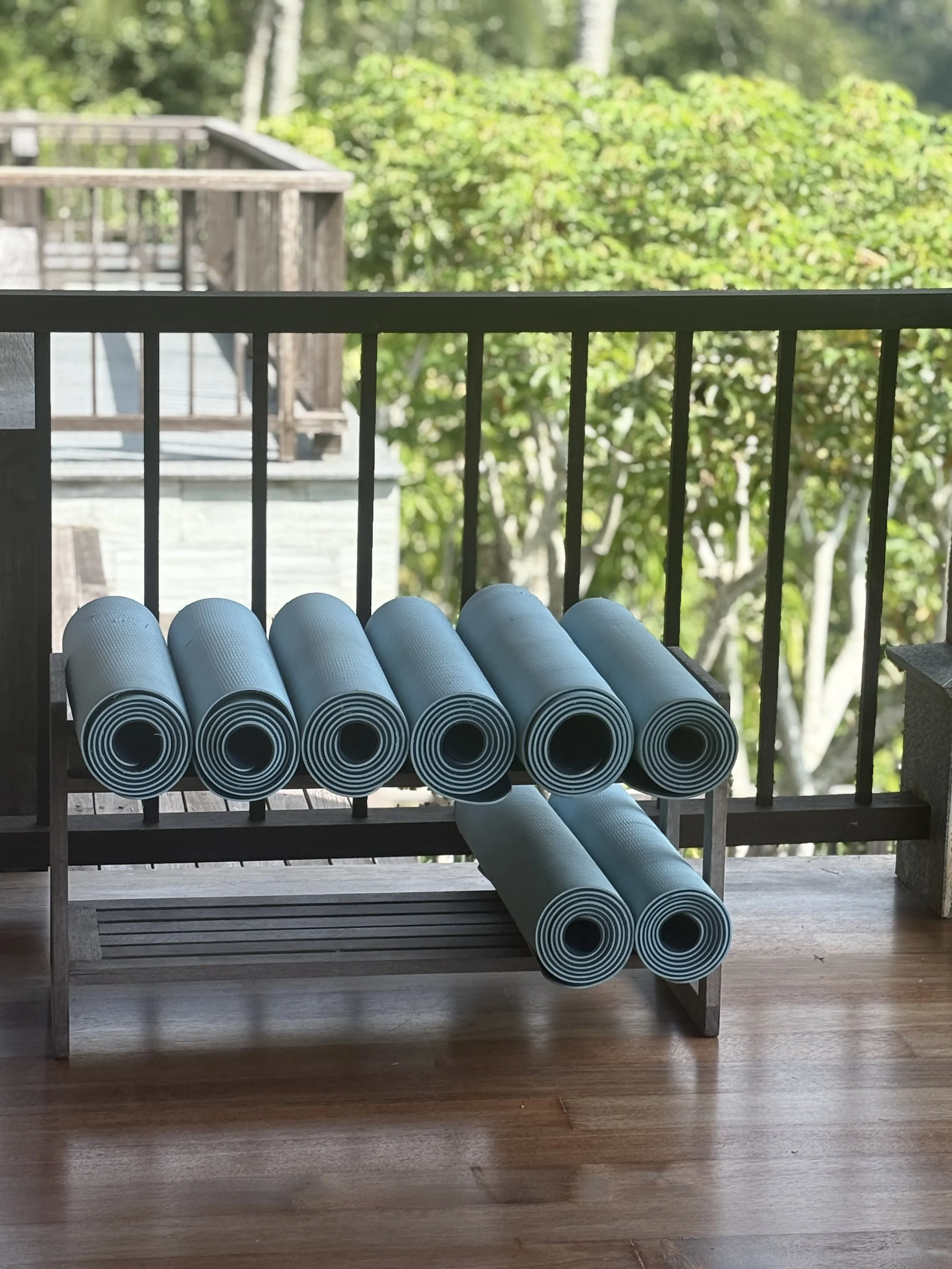
True to its Japanese roots, HOSHINOYA is guided by ritual. Mornings begin gently, perhaps with a meditation session overlooking the valley or a stretch class accompanied by the sound of running water. There is a sense of choreography to the day, but never rigidity. Time elongates here.
Cultural immersion is woven into the experience. Guests can join workshops in batik-making or learn to prepare traditional Balinese offerings. Elsewhere, Japanese tea rituals unfold with quiet precision, an elegant reminder of the brand’s heritage. It is this balance, island tradition paired with Japanese intentionality, that sets the resort apart.
Dining continues the cross-cultural conversation. The restaurant serves refined Japanese cuisine crafted with local ingredients and plated with artful restraint. Expect multi-course tasting menus illuminated by candlelight, alongside global breakfast options to suit every palate. The result is sophisticated yet grounded, each dish reflecting both place and philosophy.
A Sanctuary Above the River
Location is everything in Ubud, and HOSHINOYA’s is particularly poetic. While many resorts cluster closer to town, this property feels deliberately removed. The valley acts as a natural buffer, insulating guests from the bustle of central Ubud. Yet within a short drive, you can be wandering through galleries, temples, and artisan boutiques.
Back at the resort, the jungle reclaims your attention. Afternoon rain arrives suddenly, mist rising in theatrical plumes from the treetops. Evenings settle into a symphony of cicadas. Lanterns glow along the pathways, reflecting softly in the canals.
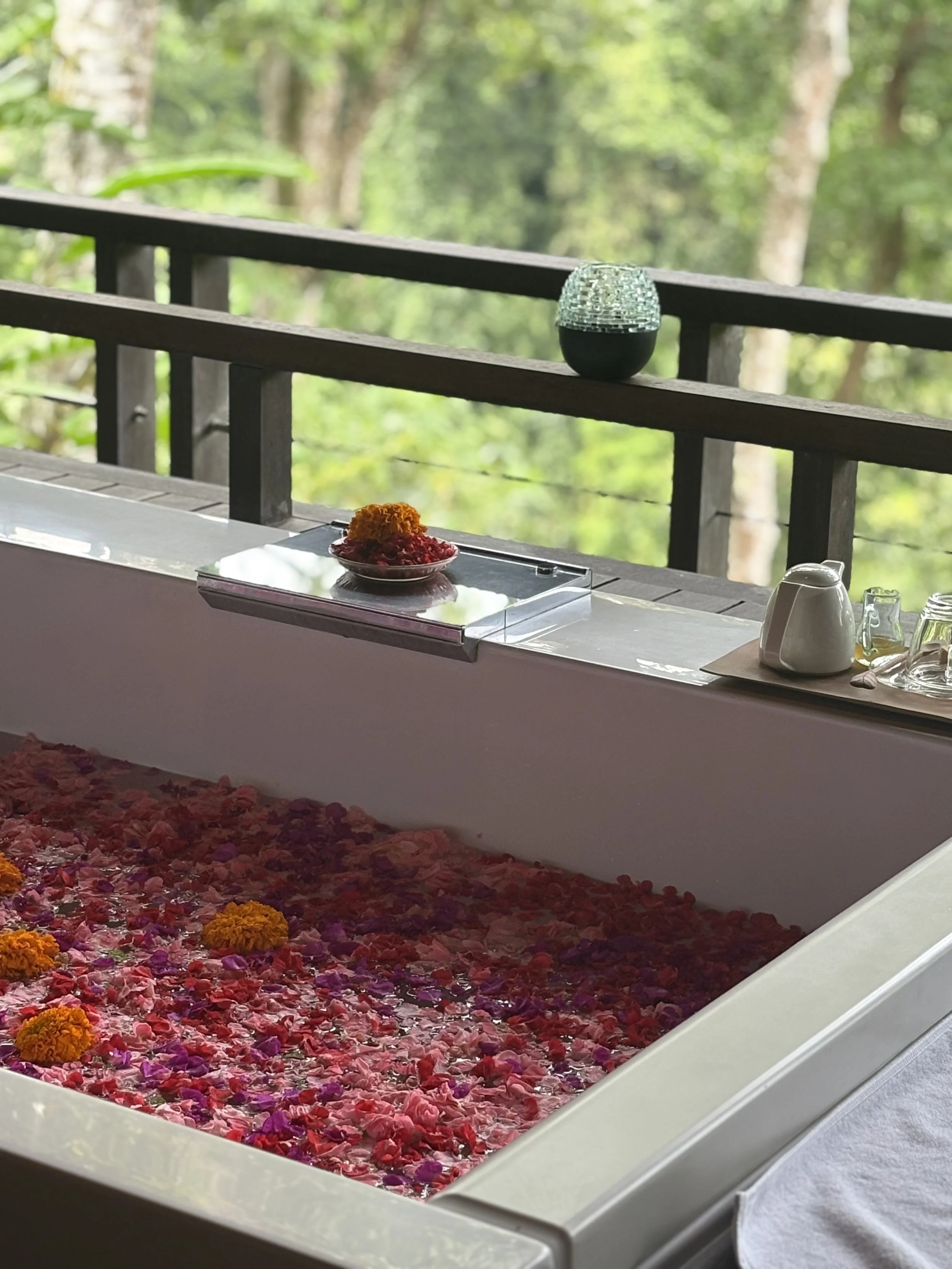
The spa, accessed by its iconic funicular, draws on both Balinese and Japanese healing traditions. Treatments incorporate local botanicals and mindful techniques, encouraging deep restoration rather than quick indulgence. It is the kind of place where you emerge not simply relaxed, but recalibrated.
Who It’s For
HOSHINOYA Ubud is for travellers who value atmosphere over spectacle, design over excess, and quiet over noise. Couples will find romance in its seclusion, while solo travellers will appreciate its contemplative calm.
It is also for aesthetes, those who notice the grain of wood beneath their fingertips, the angle of a shadow across a wall, the sound of water as it curves around stone. Every detail has been shaped with intention.
In a destination saturated with luxury resorts, HOSHINOYA Ubud distinguishes itself through restraint. It does not compete for attention; it earns it softly. By honouring Bali’s sacred waterways and layering them with Japanese philosophy, the resort achieves something rare: a sense of harmony that feels both grounded and elevated.
You leave with the memory of water, its sound, its shimmer, its symbolism, and with the quiet realisation that true luxury is not about opulence, but harmonious alignment.
